

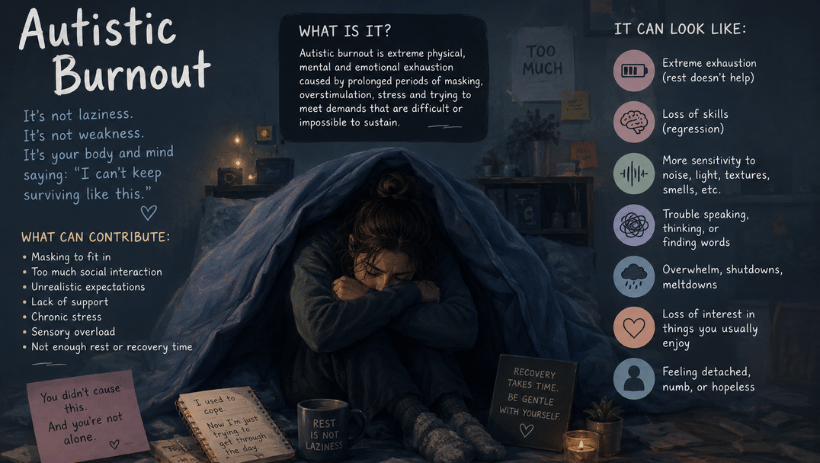
Autistic burnout is a profound and often overwhelming state of physical, emotional, and mental exhaustion that many autistic individuals experience after prolonged periods of stress, masking, and sensory overload. It develops when a person is consistently required to function in environments that do not accommodate their neurological needs, leaving little opportunity for rest or recovery.
Although it is not officially classified as a medical diagnosis, it is widely recognized within the autistic community as a real and impactful experience that can significantly affect daily life, emotional stability, and overall well-being.
This condition is often misunderstood and misinterpreted as depression or general burnout, but autistic burnout has unique causes rooted in neurodivergent experiences. Understanding it is essential for improving awareness, support, and acceptance of autistic individuals.
| Section | Key Points |
| What Is Autistic Burnout? | A condition caused by chronic stress and lack of recovery, often due to masking, sensory overload, social pressure, and suppressing natural autistic behaviors like stimming. |
| Main Causes | Masking/camouflaging, sensory overload, social exhaustion, lack of accommodations, and chronic stress or pressure to “fit in.” |
| Symptoms | Emotional exhaustion, anxiety, brain fog, memory issues, fatigue, shutdowns/meltdowns, withdrawal, and temporary loss of skills. |
| Difference from Depression | Burnout is caused by overload and improves with rest; depression is a mental health disorder with persistent low mood. They can occur together but are not the same. |
| Recovery Methods | Rest, reducing demands, unmasking, sensory regulation, and strong support systems. |
| Prevention | Regular breaks, reduced masking, boundaries, accommodations, rest, and supportive environments. |
| Final Idea | Awareness and support are essential to help autistic individuals recover, prevent burnout, and live in more inclusive environments. |
What Is Autistic Burnout?

Autistic burnout is a deeply exhausting condition that goes beyond ordinary tiredness, affecting a person’s emotional, mental, and physical well-being. It occurs when an autistic individual has been continuously exposed to high levels of stress without sufficient recovery time, support, or understanding from their environment.
This state often develops after prolonged periods of masking autistic traits to blend into social settings, enduring sensory overload in loud or chaotic environments, and managing overwhelming social expectations that feel unnatural or draining. It may also result from consistently suppressing natural self-regulating behaviors such as stimming, which are essential for emotional balance.
Main Causes of Autistic Burnout
Autistic burnout develops gradually as a result of ongoing and repeated stressors rather than a single event. One of the primary causes is masking and camouflaging, where autistic individuals continuously suppress natural behaviors such as stimming or avoid eye contact to appear neurotypical, leading to intense mental fatigue.
Sensory overload is another major factor, as overwhelming environments filled with bright lights, loud noises, strong smells, or crowded spaces can quickly drain energy and overwhelm the nervous system.
Masking and Camouflaging
Many autistic individuals consciously or unconsciously hide behaviors such as stimming, avoiding eye contact, or repeating patterns of speech to appear neurotypical. While masking may help in social situations, it requires constant mental effort.
Sensory Overload
Sensory overload occurs when the brain receives more sensory input than it can effectively process, leading to feelings of distress and exhaustion. For autistic individuals, everyday environments such as bright lights, loud noises, crowded spaces, and strong or overwhelming smells can quickly become overwhelming.
Social Exhaustion
Social exhaustion refers to the intense mental and emotional fatigue that can result from frequent or prolonged social interaction. For many autistic individuals, engaging in conversation, interpreting social cues, and maintaining expected social behaviors requires significant cognitive effort.
Lack of Accommodations
A lack of accommodations in schools, workplaces, and social environments can significantly increase stress for autistic individuals. When environments are not designed to support neurodivergent needs—such as sensory-friendly spaces, flexible communication methods, or adjusted workloads—it becomes harder to function comfortably and efficiently.
Chronic Stress and Pressure

Chronic stress and pressure develop when individuals are consistently expected to meet high standards of performance, productivity, or social conformity. For autistic people, this may include pressure to behave “normally,” hide autistic traits, or meet unrealistic academic or workplace demands.
Symptoms of Autistic Burnout
Autistic burnout can affect a person in multiple ways, including emotional, cognitive, physical, and behavioral changes. Emotionally and mentally, individuals may experience severe exhaustion, increased anxiety, emotional sensitivity, feelings of detachment or numbness, and a loss of interest or motivation in daily activities.
Emotional and Mental Symptoms
- Severe mental exhaustion
- Increased anxiety or emotional sensitivity
- Feeling detached or “numb”
- Loss of motivation or interest in activities
Cognitive Symptoms
- Difficulty thinking clearly (“brain fog”)
- Trouble with decision-making
- Memory problems
- Slower processing of information
Physical Symptoms
- Constant fatigue even after rest
- Increased need for sleep
- Headaches or body aches
- Reduced ability to complete daily tasks
Behavioral Changes
- Increased shutdowns or meltdowns
- Reduced communication ability
- Withdrawal from social interaction
- Loss of previously learned skills (temporary regression)
Difference Between Autistic Burnout and Depression

- Autistic Burnout: Caused by chronic overload, masking, and lack of support; improvement often comes with rest and reduced demands.
- Depression: A mental health disorder that may occur independently and involves persistent low mood, hopelessness, and loss of pleasure.
Recovery From Autistic Burnout
Recovery from autistic burnout is a gradual and highly individual process that requires time, patience, and a significant reduction in daily demands. The most important step is rest and reduced responsibilities, which allow the mind and body to recover from prolonged stress and exhaustion.
Rest and Reduced Demands
Rest and reducing daily demands are essential steps in recovery. This involves intentionally lowering workloads, minimizing unnecessary responsibilities, and limiting social obligations that may drain energy. By creating space for the mind and body to recover, individuals can gradually restore their cognitive and emotional capacity.
Unmasking
Unmasking refers to the process of allowing natural autistic traits and behaviors to be expressed without suppression or fear of judgment. This may include engaging in stimming, avoiding forced eye contact, speaking in a natural communication style, or setting personal boundaries without guilt.
Sensory Regulation
Sensory regulation plays a crucial role in supporting recovery by helping to calm and stabilize the nervous system. Creating a low-stimulation environment, such as reducing noise, dimming bright lights, avoiding strong smells, and minimizing visual clutter, can significantly decrease sensory stress.
Support Systems
Strong and understanding support systems are essential for recovery from autistic burnout. Family members, friends, teachers, or professionals who recognize and respect autistic needs can provide emotional reassurance, practical help, and a sense of safety. When individuals feel accepted without pressure to mask or change their natural behaviors, it becomes easier to rest and recover.
Prevention of Autistic Burnout

While it may not always be avoidable, burnout risk can be reduced by:
- Taking regular sensory breaks
- Avoiding excessive masking
- Setting personal boundaries
- Using assistive tools or accommodations
- Prioritizing mental and physical rest
- Seeking environments that support neurodiversity
Conclusion
Autistic burnout is a serious and deeply impactful experience that arises from prolonged stress, sensory overload, masking, and a lack of appropriate support or accommodations. It affects an individual’s emotional, mental, cognitive, and physical well-being, often making daily life feel overwhelming and unmanageable.
Although it is not formally classified as a medical diagnosis, it is widely recognized within the autistic community as a real and significant condition that requires understanding rather than dismissal or misunderstanding.
What makes autism particularly important to recognize is that it is often confused with depression or general fatigue, despite having distinct causes rooted in neurodivergent experiences. Recovery is possible, but it requires meaningful changes such as rest, reduced demands, unmasking, sensory regulation, and strong support systems that respect autistic needs without pressure to conform.
If you want to read an interesting article about it, explore our Health category.
FAQs
Autistic burnout is a state of extreme mental, emotional, and physical exhaustion that happens when an autistic person experiences long-term stress, sensory overload, and pressure to mask their natural traits without enough rest or support.
The main causes include masking autistic traits, sensory overload, social exhaustion, lack of accommodations in daily environments, and ongoing pressure to behave in a “normal” or expected way.
The duration varies from person to person. It can last for weeks, months, or even longer, depending on the level of stress, the support available, and whether demands are reduced to allow proper recovery.
Recovery usually involves rest, reducing responsibilities, unmasking, minimizing sensory stress, and having supportive people or environments that allow the person to heal without pressure.
It may not always be completely preventable, but the risk can be reduced by taking regular breaks, avoiding excessive masking, setting boundaries, using accommodations, and prioritizing mental and physical well-being.
