Understanding the minimum wage in Wales is essential for both employees and employers. Although Wales follows the UK-wide National Minimum Wage (NMW) and National Living Wage (NLW) set by the UK Government, knowing the latest hourly rates, eligibility rules, and legal rights can help workers ensure they are paid fairly while helping businesses remain compliant. There is more on this in Business Asset Disposal Relief.
From 1 April 2026, new minimum wage rates came into effect across Wales, covering workers in industries such as healthcare, retail, hospitality, construction, logistics, education support, manufacturing, and many others. This guide explains the current hourly pay rates, which professions they apply to, employee rights, employer responsibilities, and practical information for anyone working or hiring in Wales.
| Category | Key Information (2026) |
| National Living Wage (Age 21+) | £12.71 per hour |
| National Minimum Wage (Age 18–20) | £10.85 per hour |
| National Minimum Wage (Age 16–17) | £8.00 per hour |
| Apprentice Rate | £8.00 per hour (eligible apprentices) |
| Professions Covered | Retail, healthcare, hospitality, construction, warehousing, manufacturing, cleaning, logistics, customer service, agriculture, security, administration, and more. |
| Who Is Eligible? | Most employees and workers in Wales, depending on their age and employment status. |
| Employee Rights | Receive the correct hourly wage, obtain payslips, be paid for all hours worked, and report any underpayment without retaliation. |
| Employer Responsibilities | Pay the correct minimum wage, maintain payroll records, apply annual rate increases, correctly classify apprentices, and comply with HMRC regulations. |
| Common Industries | Retail, supermarkets, care homes, restaurants, hotels, transport, warehouses, factories, farms, offices, and public services. |
| Enforcement | HMRC can investigate employers, recover unpaid wages, and impose financial penalties for non-compliance. |
| Annual Review | Minimum wage rates are typically updated each April by the UK Government. |
| Main Benefit | Protects workers with a legal minimum income while ensuring fair pay practices across all industries in Wales. |
Minimum Wage in Wales 2026: Current Hourly Rates

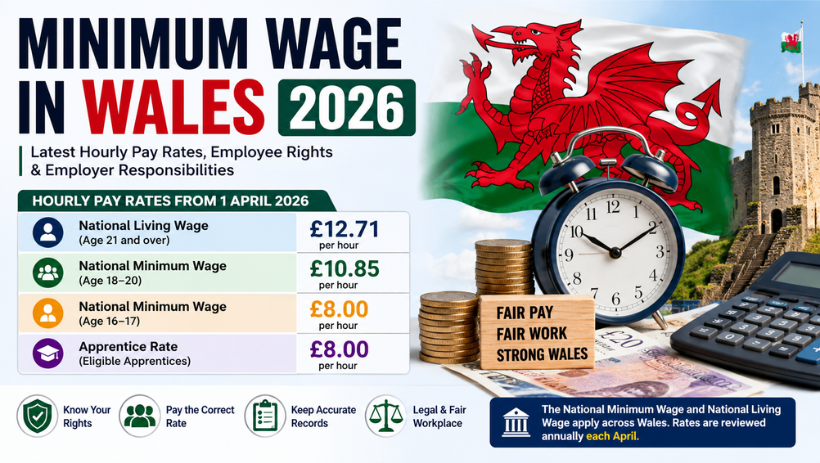
The legal minimum wage depends on a worker’s age and apprenticeship status rather than their profession. These rates apply throughout Wales from 1 April 2026.
| Category | Hourly Rate (2026) |
| National Living Wage (Age 21+) | £12.71 |
| Age 18–20 | £10.85 |
| Age 16–17 | £8.00 |
| Apprentice Rate* | £8.00 |
*The apprentice rate generally applies to apprentices under 19 or those aged 19+ in the first year of their apprenticeship.
Which Professions Receive These Rates?
The legal minimum applies across almost every sector. While many employers pay more than the statutory minimum, these are the lowest legal hourly rates for eligible workers.
| Profession | Typical Minimum Hourly Pay (2026) |
| Retail Assistant | From £12.71 (21+) |
| Supermarket Worker | From £12.71 |
| Care Assistant | From £12.71 |
| Healthcare Support Worker | From £12.71 |
| Hospitality Staff (Hotels & Restaurants) | From £12.71 |
| Waiter/Waitress | From £12.71 |
| Kitchen Assistant | From £12.71 |
| Cleaner | From £12.71 |
| Warehouse Operative | From £12.71 |
| Delivery Driver | From £12.71 |
| Factory Worker | From £12.71 |
| Farm Worker* | At least the applicable legal minimum |
| Security Guard | From £12.71 |
| Receptionist | From £12.71 |
| Call Centre Advisor | From £12.71 |
| Construction Labourer | From £12.71 |
| Apprentice (Eligible) | £8.00 |
*Agricultural workers may also be covered by separate sector-specific arrangements where applicable.
How Age Affects Your Pay?

Age is the primary factor that determines the legal minimum wage.
Workers Aged 21 and Over
Employees aged 21 or older are entitled to the National Living Wage of £12.71 per hour unless they already earn more through their employment contract.
Workers Aged 18 to 20
Employees in this age group must receive at least £10.85 per hour.
Workers Aged 16 to 17
Young workers are legally entitled to a minimum hourly wage of £8.00.
Apprentices
Eligible apprentices receive £8.00 per hour if they are under 19 or are 19 or older and in the first year of their apprenticeship. After that, the relevant age-based minimum wage usually applies.
Industries Commonly Paying the Legal Minimum

Many sectors rely heavily on entry-level or hourly-paid staff.
These include:
- Retail and supermarkets
- Hospitality and tourism
- Restaurants and cafés
- Residential care homes
- Warehousing and logistics
- Manufacturing
- Cleaning services
- Agriculture
- Customer service
- Food production
Although these industries often start employees at the legal minimum, many employers offer higher wages based on experience, qualifications, or local labour market conditions.
Employee Rights
They have the right to:
Workers covered by the legislation have several important legal protections.
- Receive at least the correct legal hourly wage.
- Receive payslips showing their earnings.
- Be paid for all qualifying working time.
- Challenge unlawful underpayment.
- Report wage violations without unfair treatment.
Employees who believe they are underpaid can raise the issue with their employer or seek assistance through the appropriate employment channels.
Employer Responsibilities
Employers in Wales are legally required to pay workers at least the statutory minimum wage, which varies by age or apprenticeship status. This includes ensuring employees receive the correct hourly rate, maintaining accurate payroll and wage records, reviewing annual wage increases that typically take effect each April, and correctly classifying apprentices according to the applicable rules.
Employers must also cooperate with HMRC if HMRC inspects payroll records. Failing to meet these obligations can result in the repayment of wage arrears, financial penalties, and enforcement action.
Tips for Employees
If you are unsure whether you are receiving the correct pay:
- Check your age category.
- Review your hourly rate on your payslip.
- Count all working hours accurately.
- Ask your employer if something appears incorrect.
- Keep copies of contracts and payslips.
Why These Rates Matter?

Legal minimum wages help protect low-paid workers while creating a fair baseline for employers. Annual increases also aim to reflect changes in earnings and the cost of living. For many workers in retail, hospitality, healthcare support, logistics, and similar sectors, these rates form the foundation of their earnings and employment rights.
Conclusion
The minimum wage in Wales remains an important safeguard for workers across every major industry. Whether you work in retail, hospitality, healthcare, construction, warehousing, manufacturing, or customer service, understanding the current hourly rates and your legal rights can help ensure you receive fair pay.
Employers also benefit from staying informed, as compliance with the latest National Minimum Wage and National Living Wage rules helps avoid penalties while supporting a fair and productive workplace. As rates are reviewed each year, it is always advisable to check the latest government guidance before making employment or payroll decisions.
Want to know about Payroll Outsourcing Services: The Complete 2026 Guide to Costs, Benefits, Payroll Processing, Compliance, and Choosing the Best Provider Check out our Business category.
Frequently Asked Questions
From 1 April 2026, workers aged 21 and over are entitled to at least £12.71 per hour under the National Living Wage.
No. Wales follows the same National Minimum Wage and National Living Wage rates as the rest of the UK.
Yes. Eligible apprentices receive £8.00 per hour, subject to the apprenticeship rules based on age and year of training.
You should first discuss the issue with your employer. If it is not resolved, you may seek guidance through HMRC or the appropriate employment advice services, as employers are legally required to pay at least the applicable minimum wage.