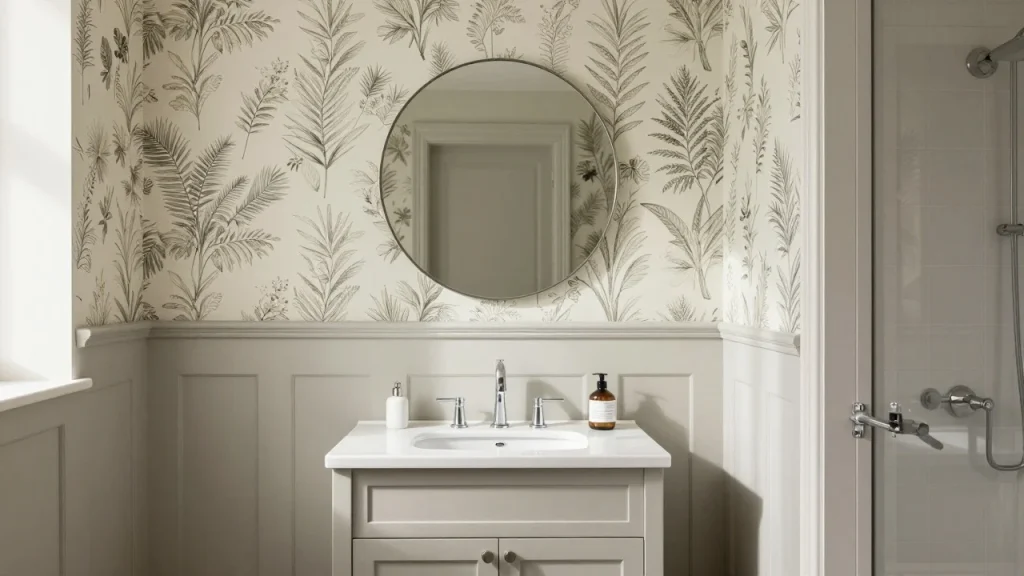
Wallpaper can give a bathroom far more personality than plain paint, whether you want a dramatic botanical print, understated stripes or a hotel-inspired mural. The challenge is that bathrooms expose wall finishes to steam, condensation and occasional splashes, so choosing a design purely because it looks good can lead to peeling edges and damaged paper. The best bathroom wallpaper combines the right material, sensible placement and effective ventilation.
For UK homeowners, wallpaper can be particularly useful in small bathrooms, en suites and downstairs cloakrooms where a limited amount of patterned wall can make a noticeable design difference. You do not necessarily need to cover every surface, and in many bathrooms a single feature wall or wallpaper above panelling creates a better balance. This guide explains which materials work, where wallpaper should go, and how to choose a design that remains attractive after the room becomes steamy. Readvanta’s home improvement guides cover the related renovation decisions you may be weighing up at the same time.
Quick answer: Yes, wallpaper can work well in a bathroom when you choose a washable, moisture-resistant product and keep it away from walls that receive frequent direct water. Vinyl and bathroom-rated wallcoverings are usually the safest everyday choices. Good ventilation, dry wall preparation and careful seam finishing matter just as much as the pattern.
Can You Put Wallpaper in a Bathroom?
Yes, you can put wallpaper in a bathroom, but that does not mean every wallpaper can be installed on every wall. A downstairs cloakroom with only a toilet and basin creates very different conditions from a family bathroom where several people take hot showers every day. Moisture exposure should therefore determine the wallpaper specification before colour or pattern enters the decision.
UK consumer guidance recommends choosing bathroom-suitable wallpaper, ideally with a durable vinyl finish, rather than using ordinary decorative paper in a humid room. It also recommends avoiding areas that receive frequent splashes, such as surfaces immediately around showers and basins. This distinction between a humid wall and a genuinely wet wall is one of the most important things to understand before decorating.
Wallpaper Types at a Glance
| Wallpaper type | Bathroom suitability | Best location | Main consideration |
|---|---|---|---|
| Vinyl wallpaper | Very good | General bathroom walls | Choose a washable, moisture-resistant product |
| Bathroom-rated wallpaper | Very good | Humid areas outside direct wet zones | Check the manufacturer’s instructions |
| Peel-and-stick vinyl | Good in suitable conditions | Cloakrooms and dry feature walls | Surface preparation and ventilation are important |
| Non-woven wallpaper | Varies | Drier areas | Only use when the product is suitable for humid rooms |
| Traditional paper wallpaper | Limited | Low-humidity cloakrooms | More vulnerable to moisture |
| Specialist wet-room wallcovering | Excellent when correctly specified | Some shower or wet zones | Must be an approved complete system |
What Is the Best Wallpaper for a Bathroom?
For most homes, washable vinyl or wallpaper specifically described by the manufacturer as suitable for bathrooms is the safest starting point. Vinyl-faced products absorb less surface moisture than ordinary paper and are easier to wipe when condensation, toothpaste, or cosmetic splashes reach the wall. However, even vinyl wallpaper should not automatically be treated as suitable for the inside of a shower.
Product descriptions can use terms such as washable, water-resistant, moisture-resistant and waterproof, but those descriptions are not interchangeable. Before buying, check exactly what the manufacturer allows and whether the paper is designed merely to tolerate humidity or to withstand direct water. A wallpaper that performs perfectly behind a toilet may still be the wrong product for a wall beside an open shower.
Vinyl Wallpaper
Vinyl wallpaper is popular in bathrooms because its finished surface is more practical around humidity than an absorbent paper face. It is available in everything from traditional florals to terrazzo, marble, geometric, and contemporary textured effects, so using a practical material does not restrict your design choices. Choose a product whose care and installation information specifically supports use in bathrooms or humid environments.
Another advantage is cleanability, especially in busy family bathrooms where walls can collect splashes and marks. A washable surface can generally be cleaned more easily than delicate uncoated paper, although the manufacturer’s cleaning instructions should always take priority. Avoid aggressive scrubbing or strong chemicals unless the product specifically permits them.
Specialist Bathroom Wallpaper
Some wallcoverings are developed specifically for humid spaces and provide greater reassurance than simply choosing an attractive standard roll. These products may use protective surfaces, robust backing materials or installation systems intended to reduce problems caused by moisture. The manufacturer’s technical information remains important because different products tolerate very different levels of exposure.
Specialist wet-room systems go a step further and can make wallpaper-style finishes possible in locations where ordinary rolls would fail. These products rely on the complete specified system rather than the decorative surface alone, so primers, adhesives, coatings, seams,s and installation methods all matter. Standard non-woven or vinyl wallpaper should not be substituted for a specialist system inside an area that receives direct shower water.
Peel-and-Stick Bathroom Wallpaper
Peel-and-stick wallpaper can be a convenient choice for renters or anyone who wants a relatively quick decorative change without conventional paste. Moisture-resistant vinyl versions can work on clean, smooth, and dry bathroom walls that remain outside the main splash zones. They are particularly appealing in downstairs loos and low-moisture en suites where temporary design flexibility is useful.
The weak point is often not the printed face but the bond between the adhesive and the wall. Poorly prepared, dusty, damp,p or textured surfaces can reduce adhesion, while persistent condensation can make edge lifting more likely. Always check whether the particular peel-and-stick product is approved by its manufacturer for bathroom use rather than assuming every removable wallpaper will cope with steam.
Waterproof vs Moisture-Resistant Wallcoverings
A moisture-resistant wallpaper is designed to cope with conditions such as humidity, occasional condensation or light splashing, depending on its specification. A genuinely waterproof wallcovering system is designed for much more demanding water exposure and normally involves specialist materials and installation instructions. Calling an ordinary vinyl roll waterproof simply because droplets can be wiped from its surface can create expensive problems.
Think about the wall rather than the room as a whole when deciding what level of protection you need. The wall behind a toilet may remain almost completely dry, while the wall next to a shower can receive water every morning even though both surfaces are in the same bathroom. Matching the wallcovering to the actual exposure produces a safer and longer-lasting result.
Where Should You Use Wallpaper in a Bathroom?
The most successful schemes keep decorative paper in areas where it can handle normal steam without being repeatedly soaked. This approach also lets you combine pattern with hard-wearing surfaces such as tiles, shower panels or splashbacks. Instead of thinking of wallpaper as a replacement for every tiled surface, use it as a design layer in the parts of the room where it makes practical sense.
These are good places to consider.
- A feature wall opposite the shower or bath
- The wall behind the toilet
- Upper walls above tiles, panelling or a splashback
- A dry vanity wall with adequate protection around the basin
- A downstairs cloakroom or WC
- A well-ventilated en suite
- An alcove or decorative section away from direct water
Some areas are better left unpapered.
- Inside a shower enclosure
- Directly beside an open shower where the wall becomes wet
- Bath surrounds that receive frequent splashing
- Persistently damp or mould-affected walls
- Surfaces where condensation remains for long periods
- Walls with unresolved leaks or penetrating damp
11 Wallpaper Ideas for UK Bathrooms
Bathrooms are one of the easiest rooms in which to experiment with pattern because the decorated wall area is usually smaller than in a bedroom or living room. A design that might feel overpowering across four large walls can feel intentional and luxurious in a compact cloakroom. The following ideas can work across traditional properties, modern flats, new-build homes and small en suites.
1. Botanical Prints for a Relaxed Look
Leaf, fern and floral patterns suit bathrooms naturally because they introduce an outdoor influence into a room associated with water and relaxation. Deep green botanical wallpaper can create a dramatic boutique-hotel effect, while softer sage and eucalyptus shades make the room feel calmer. Pair the pattern with warm wood, off-white sanitaryware or brass details to prevent the design from feeling overly busy.
2. Tropical Wallpaper for a Statement Wall
Large palm leaves, exotic flowers and richly coloured tropical prints work particularly well on one dry feature wall. They can turn a plain bathroom into a more immersive space without the expense of replacing the bath, basin or tiles. Keeping the remaining walls relatively simple allows the wallpaper to become the focal point.
3. Marble-Effect Wallpaper
Marble-effect wallpaper offers a decorative way to introduce the appearance of stone on a wall that does not need to be tiled. Pale grey veining can support a clean contemporary scheme, while black, green or warm beige marble effects create a stronger luxury look. Use the finish outside regular wet zones and avoid presenting printed wallpaper as a functional substitute for waterproof stone or shower panels.
4. Tile-Effect Designs
Tile-effect wallpaper can bring pattern to an upper wall without requiring additional ceramic installation. Victorian-inspired motifs suit period homes, while clean geometric designs work well in modern bathrooms and rented properties. The result is most convincing when the scale of the printed tile complements the dimensions of the room rather than using an oversized pattern in a very narrow space.
5. Vertical Stripes
Vertical stripes can visually emphasise height, which makes them useful in compact bathrooms with modest ceilings. Fine stripes create a more traditional or tailored appearance, while wider bands feel bolder and more contemporary. Continuing the same colour elsewhere through towels, cabinetry or painted woodwork can make the scheme feel deliberate.
6. Dark Wallpaper in a Downstairs Cloakroom
A small downstairs loo does not always need pale colours to feel successful. Navy, forest green, charcoal and burgundy backgrounds can create a sophisticated enclosed atmosphere, particularly when combined with warm lighting and mirrors. Because a cloakroom normally has no shower, it is also one of the easier places to experiment with more decorative wall finishes.
7. Soft Neutrals for a Spa-Inspired Bathroom
Beige, stone, warm grey and soft taupe wallpaper can add visual texture without dominating the room. Subtle linen, plaster or natural-surface effects work well with timber vanity units, neutral tiles and simple fittings. This approach suits homeowners who want more depth than paint provides but do not want a strongly patterned bathroom.
8. Small-Scale Prints for Traditional Homes
Small florals, delicate geometrics and repeating heritage patterns can complement Victorian, Edwardian and cottage-style interiors. They work particularly well above wall panelling because the solid lower section provides visual structure beneath the pattern. Choosing colours already present in the flooring or joinery helps the wallpaper feel connected to the rest of the property.
9. Large Murals for a Modern Feature Wall
A mural can turn an otherwise plain wall into artwork, especially in a larger bathroom where the image has enough distance to be appreciated. Landscapes, abstract forms, oversized botanicals and architectural designs can all create a strong focal point. Make sure the chosen mural material is suitable for the humidity level and that important parts of the image will not be lost behind mirrors or cabinets.
10. Wallpaper Above Panelling
Combining painted panelling below with wallpaper above gives the room both pattern and practical visual structure. The lower section can deal with everyday knocks and minor splashes while the wallpaper remains farther from many sources of water. This combination is especially effective in traditional bathrooms and cloakrooms.
11. One Bold Feature Wall
If you like a dramatic print but are unsure about using it across the entire bathroom, start with one carefully chosen wall. A feature wall reduces material costs, makes installation simpler, er and stops strong patterns from competing with tiles or patterned flooring. Position it where it can be seen from the doorway while keeping it away from the wettest part of the room.
What Wallpaper Works Best in a Small Bathroom?
Small bathrooms do not automatically require tiny patterns or pale wallpaper. A large repeat can actually make a compact cloakroom feel more intentional because the eye reads the design rather than focusing on the room’s dimensions. The key is controlling the number of competing finishes so wallpaper, flooring, tiles and accessories do not all demand attention at once.
If the bathroom already contains patterned floor tiles, choose wallpaper with a simpler design or a related colour palette. If the fixtures and floor are plain, a stronger floral, geometric or mural-style design can provide the missing character. Mirrors and good lighting can then help distribute light without forcing you to abandon deeper colours.
How to Choose the Right Colour
Start with the permanent items that are expensive or inconvenient to replace, including tiles, flooring, sanitaryware and vanity units. Wallpaper should connect those features rather than introducing an unrelated palette, so take samples into the room and view them in daylight and artificial light. A print that appears warm beige online can look noticeably greyer beside cool bathroom tiles.
Also consider how you want the room to feel rather than simply following current trends. Blues, greens and soft neutrals can support a calm atmosphere, whereas jewel tones and dark backgrounds create greater drama. Repeating one or two colours from the paper in towels, cabinet paint or accessories usually produces a more coherent finish than trying to match every shade.
How to Wallpaper a Bathroom Successfully
Installation quality matters more in a bathroom because moisture can expose weaknesses around seams and edges. The surface should be sound, clean and fully dry before decorating, and existing mould or damp should be dealt with at its source rather than covered. Manufacturers may specify particular primers or adhesives, so follow the instructions supplied with your chosen wallcovering.
A sensible process is:
- Solve moisture problems first. Repair leaks and investigate persistent damp, condensation or mould before decorating.
- Check ventilation. Make sure the bathroom can remove moist air effectively after bathing or showering.
- Choose a suitable product. Confirm that the wallpaper is recommended for bathrooms or humid spaces.
- Inspect the wall. Fill holes, remove loose coatings, and create a smooth, stable surface.
- Let the room dry. Avoid hanging paper while walls or the room itself remain damp.
- Use the specified adhesive. Do not assume a general-purpose paste is correct for every bathroom wallcovering.
- Align and finish seams carefully. Poorly bonded edges are particularly vulnerable in humid environments.
- Allow proper drying time. Avoid filling the room with shower steam immediately after installation.
- Maintain ventilation afterwards. Regularly clearing humid air helps protect both wallpaper and the rest of the bathroom.
Ventilation deserves particular attention because decorative products cannot compensate for a room that stays wet for hours after every shower. In England, building ventilation is addressed through Approved Document F, while applicable rules and standards can differ elsewhere in the UK and according to the project. Homeowners planning substantial work should therefore check the requirements relevant to their location rather than treating wallpaper itself as a solution to condensation.
If high humidity is already a wider problem in your property, it is worth dealing with that before investing in new wall finishes. Readvanta’s guide to using a dehumidifier for damp and condensation explains how these units reduce excess airborne moisture, although they do not replace fixing leaks or providing appropriate ventilation.
Common Wallpapering Mistakes in Bathrooms
Even expensive wallpaper can fail when it is installed in the wrong location or over a poorly prepared surface. Most avoidable problems come from treating a bathroom like an ordinary dry room rather than considering how water moves through the space. Checking the practical details before ordering is much cheaper than rehanging a wall several months later.
Avoid these common mistakes.
- Using ordinary paper wallpaper in a heavily used, steamy bathroom
- Assuming “washable” automatically means suitable for direct shower water
- Hanging wallpaper over damp, mouldy or unstable walls
- Applying wallpaper immediately beside an unprotected shower
- Ignoring the manufacturer’s recommended adhesive
- Leaving loose edges around sockets, mirrors or fittings
- Failing to allow prepared walls to dry
- Choosing a complicated pattern without allowing extra material for matching
- Ignoring ventilation because the wallpaper is described as moisture-resistant
How to Keep the Wallpaper Looking Good
After installation, prevent prolonged condensation from sitting on the wallpaper whenever possible. Use the room’s ventilation, allow moist air to clear, and wipe significant surface moisture according to the wallpaper manufacturer’s care instructions. Persistent damp patches should be investigated rather than repeatedly dried and ignored.
Check seams and edges occasionally, especially near windows, mirrors and areas exposed to changing temperatures. Small signs of lifting can indicate a local adhesion problem, but repeated bubbling, staining or mould may point to a larger moisture issue behind the finish. Addressing the underlying cause early protects both the decoration and the wall beneath it.
Is Wallpaper Cheaper Than Tiling?
Wallpaper can be less expensive than tiling when it is used on suitable dry or low-splash walls, particularly if you are comfortable doing the decorating yourself. However, the total cost depends on the price and coverage of each roll, pattern repeat, preparation materials, adhesive, and whether professional installation is needed. Specialist waterproof wallcovering systems can cost considerably more than ordinary decorative wallpaper because the system and installation requirements are different.
Do not compare costs by looking only at the price of one wallpaper roll against a box of tiles. Tiles, waterproof panels and wallpaper perform different jobs in a bathroom, so the cheapest approach is often to use each material where it makes practical sense. Combining durable wet-zone finishes with wallpaper elsewhere can provide both visual impact and sensible moisture protection.
Final Thoughts
Bathroom wallpaper can be a practical way to add colour, pattern and personality when you choose the right product for the conditions. The safest approach is to use washable, moisture-resistant wallcoverings on appropriately dry walls, reserve genuinely wet areas for finishes designed for direct water, and maintain effective ventilation. Once those practical decisions are made, everything from understated stripes to dramatic botanical prints becomes possible.
Before ordering, inspect the bathroom wall by wall and identify where steam, condensation and splashes actually occur. Then compare the manufacturer’s suitability information, order samples and build your colour scheme around the finishes that are already staying in the room. For more renovation inspiration and practical household guides, explore Readvanta’s wider home-improvement coverage.
Frequently Asked Questions
Is bathroom wallpaper waterproof?
Some specialist wallcovering systems are designed for direct water exposure, but ordinary wallpaper sold for bathrooms should not automatically be considered waterproof. Most everyday bathroom-suitable products are better described as washable or moisture-resistant and are intended for humid areas rather than continuously wet surfaces. Always check the manufacturer’s technical information before deciding where a particular product can be installed.
Can wallpaper go behind a bathroom sink?
Wallpaper may be suitable behind a basin when the area receives only limited splashing and the product is designed for bathroom conditions. A splashback can protect the most exposed part of the wall while wallpaper is used above or around it. If the wall is regularly soaked during normal use, choose a finish specifically designed for that level of water exposure instead.
Can I use peel-and-stick wallpaper in a bathroom?
Yes, some moisture-resistant peel-and-stick wallpaper can work in bathrooms, particularly on dry feature walls and in well-ventilated cloakrooms or en suites. The wall must be smooth, clean and dry, and the product should be kept away from frequent direct water unless the manufacturer states otherwise. Checking bathroom suitability before buying is more reliable than assuming that all self-adhesive wallpaper performs the same way.
Does wallpaper cause mould in bathrooms?
Wallpaper itself does not automatically cause mould, but persistent moisture can create conditions in which mould develops on or behind decorative finishes. Poor ventilation, leaks, cold surfaces and trapped moisture should therefore be investigated if mould repeatedly returns. Covering an existing mould problem with new wallpaper hides the symptom rather than correcting the cause.
What wallpaper is best for a downstairs toilet?
A downstairs toilet or cloakroom gives you considerably more freedom because it usually produces less humidity than a bathroom containing a shower. Washable wallpaper is still practical around a basin, but bold colours, florals, geometrics and more decorative finishes can work particularly well in these compact spaces. A dramatic design can make a small WC feel intentionally styled rather than simply functional.
Should you wallpaper all four bathroom walls?
You can wallpaper several walls when the room conditions and chosen product are suitable, but covering every wall is not always the strongest design choice. A feature wall, wallpaper above panelling, or a combination of wallpaper and tiles can give the room more visual structure while protecting the wettest areas. The right layout depends on water exposure first and decorative preference second.