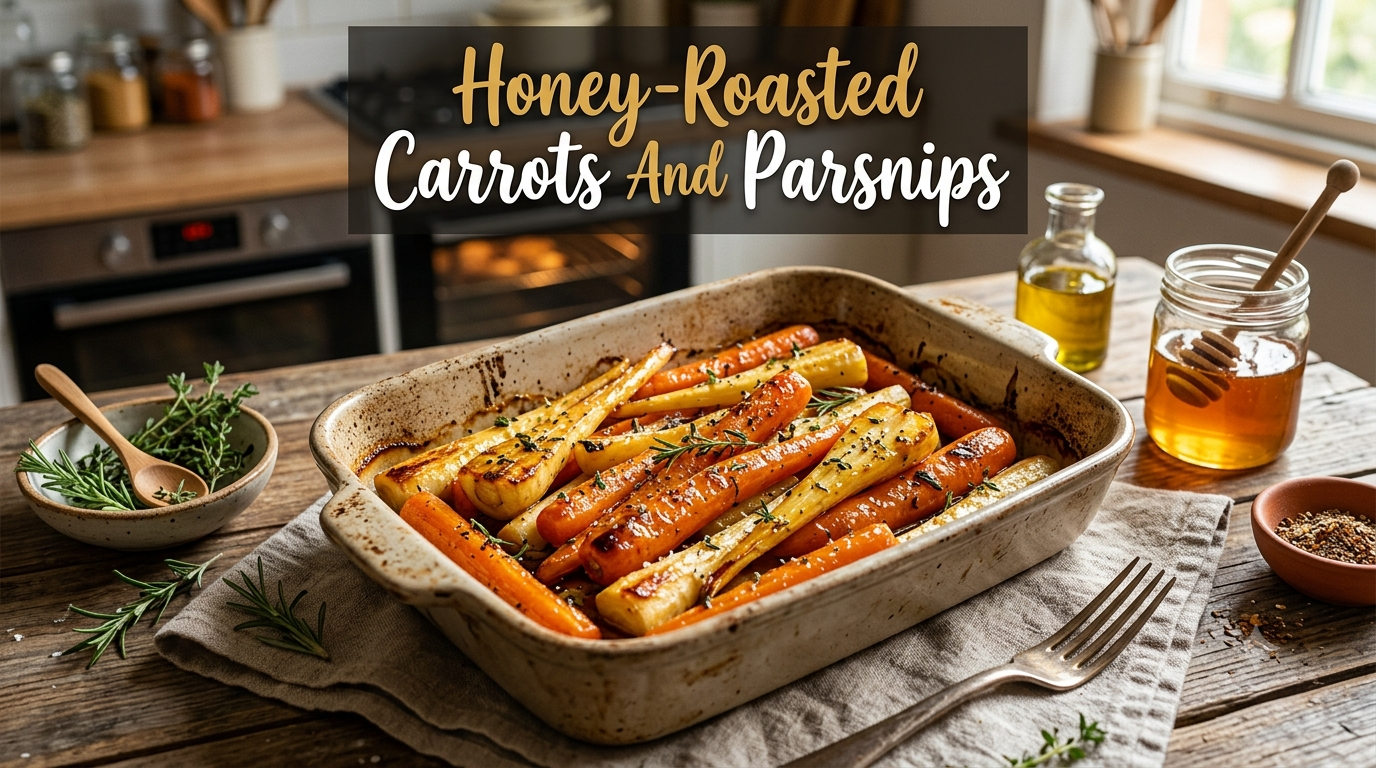
If you’re searching for a simple yet impressive vegetable side dish, honey-roasted carrots and parsnips are a perfect choice. This classic oven-roasted recipe combines natural sweetness, caramelized edges, and earthy flavors to create a dish that works for weeknight dinners, festive meals, and everything in between.
The roasting process enhances the vegetables’ natural sugars. At the same time, honey adds a glossy glaze that boosts both flavor and appearance, making it a reliable option for elevating everyday ingredients into something special.
Beyond their taste, Honey Roasted Carrots and Parsnips are highly versatile and easy to customize. You can adjust seasonings to match different cuisines, from simple salt and pepper for classic roasts to warming spices like cinnamon or paprika for a deeper, more aromatic profile.
| Section | Key Focus | Details | Pro Tips |
| Ingredients | Core components | Carrots, parsnips, honey, olive oil, salt, pepper, herbs | Use evenly sized cuts for uniform roasting |
| Cooking Method | Oven roasting process | Roast at 200°C (400°F) for 25–35 minutes | Flip halfway for even caramelization |
| Flavor Variations | Custom taste options | Garlic herb, spicy paprika, citrus glaze, balsamic finish | Add delicate ingredients (like honey) near the end for better control |
| Cooking Tips | Texture & flavor improvement | Don’t overcrowd the tray; preheat the oven; use parchment paper | Space vegetables for crisp edges |
| Serving Ideas | Meal pairings | Roast chicken, lamb, fish, grain bowls, holiday spreads | Serve hot for best flavor and texture |
| Nutrition Benefits | Health value | Rich in fiber, vitamin A, antioxidants | Use minimal oil for a lighter dish |
| Common Mistakes | What to avoid | Uneven cuts, too much honey, low oven heat | Always roast at high temperature for caramelization |
Why This Roasted Vegetable Dish Works So Well

The magic of this dish lies in balance. Carrots bring natural sweetness, while parsnips add a nutty, slightly peppery depth. When roasted with honey, both vegetables caramelize beautifully.
Key benefits:
- Naturally sweet without refined sugar
- Rich in fiber, vitamins, and antioxidants
- Budget-friendly and widely available ingredients
- Works with almost any main dish
This combination makes it ideal for healthy eating without sacrificing flavor.
Ingredients You’ll Need
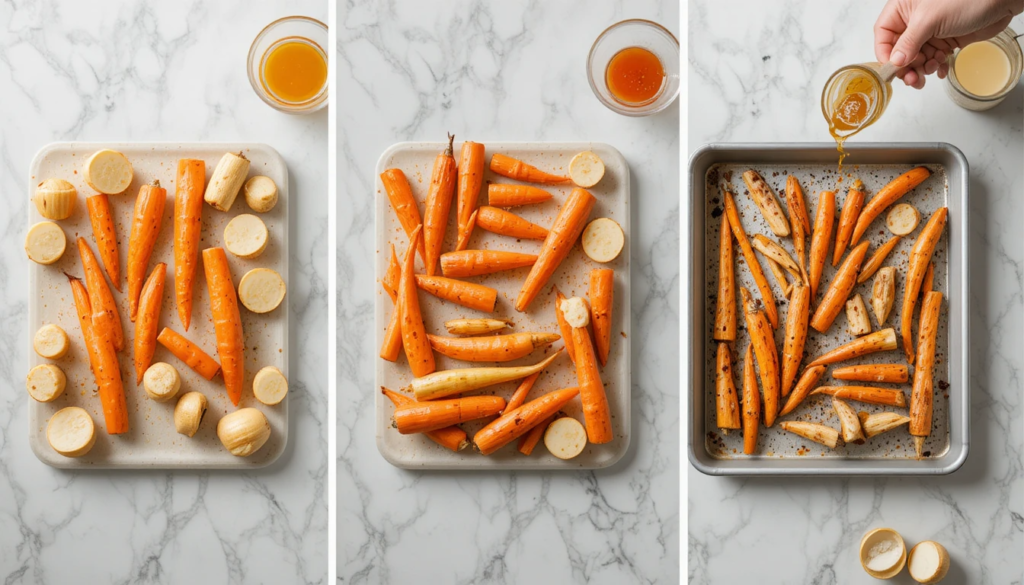
Simple ingredients are all it takes to create a flavorful roasted vegetable side dish.
Basic Ingredients:
- Carrots (peeled and cut into sticks)
- Parsnips (peeled and cut similar size to carrots)
- Honey
- Olive oil or melted butter
- Salt and black pepper
- Fresh herbs (optional)
Step-by-Step Cooking Method for Honey-Roasted Carrots And Parsnips

Perfect roasting is all about temperature, timing, and even coating.
Step 1: Preheat the Oven
Set your oven to 200°C (400°F). A hot oven ensures caramelization.
Step 2: Prepare the Vegetables
Cut carrots and parsnips evenly, so they cook at the same rate.
Step 3: Season and Coat
Toss vegetables with:
- Olive oil
- Honey
- Salt and pepper
Make sure everything is evenly coated for consistent flavor.
Step 4: Roast Until Golden
Spread them in a single layer on a baking tray. Roast for 25–35 minutes, flipping halfway through.
Step 5: Finish and Serve
Once golden and tender, remove from the oven and garnish with herbs if desired.
Cooking Time & Temperature Guide
| Step | Temperature | Time | Result |
| Preheating | 200°C / 400°F | 10 min | Even roasting start |
| Roasting (first half) | 200°C | 15–18 min | Softening vegetables |
| Roasting (second half) | 200°C | 10–15 min | Caramelized edges |
| Final rest | Off heat | 5 min | Flavor settling |
Flavor Variations to Try
One of the best things about this dish is its flexibility. You can easily customize it based on your taste.
1. Garlic Herb Version
Add minced garlic, thyme, and rosemary for a savory twist.
2. Spiced Honey Version
Add cinnamon, paprika, or cumin for warmth and depth.
3. Citrus Glazed Style
Mix orange zest or a splash of lemon juice with honey for brightness.
4. Balsamic Upgrade
Drizzle balsamic vinegar in the last 5 minutes of roasting for a rich glaze.
Expert Cooking Tips for Perfect Results
To make sure your dish turns out restaurant-quality every time, follow these tips:
- Cut vegetables evenly for consistent cooking
- Don’t overcrowd the tray (use two trays if needed)
- Use parchment paper for easy cleanup and better caramelization
- Flip halfway through roasting for even browning
- Add honey toward the end if you prefer deeper caramel flavor
These small adjustments make a big difference in texture and taste.
Serving Ideas for Any Occasion
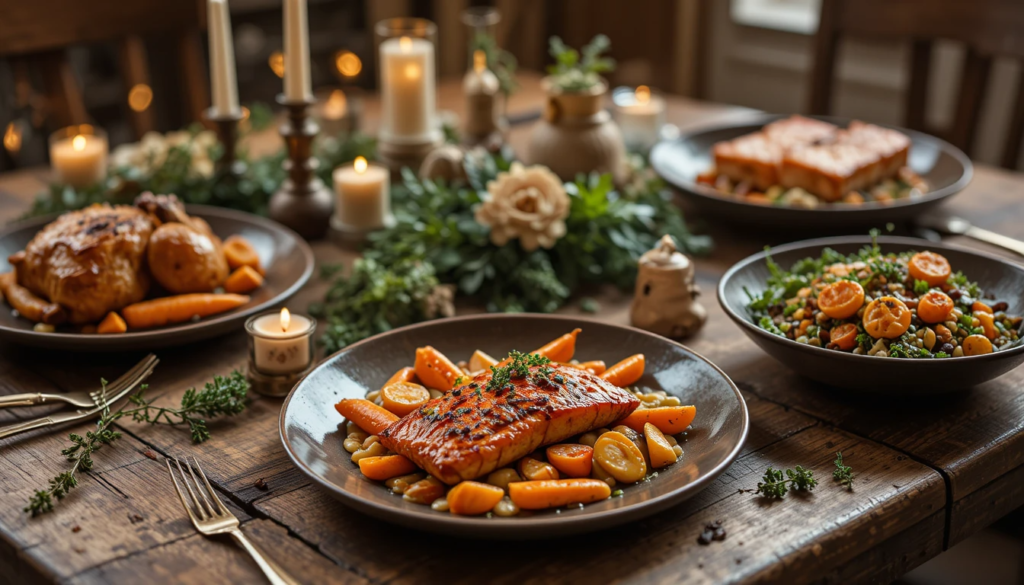
This roasted vegetable dish is incredibly versatile and pairs well with many meals, making it a reliable side for both everyday cooking and special occasions. It complements rich mains like roast chicken or turkey, grilled lamb or beef, and also works beautifully with lighter dishes such as baked salmon or white fish.
For plant-based meals, it adds warmth and natural sweetness to vegetarian grain bowls, quinoa salads, and lentil-based dishes, and it fits seamlessly into festive holiday dinner spreads where a colorful, caramelized vegetable side is needed.
Beyond main pairings, it can also be served in multiple creative ways. You can use it as a warm salad topping to add depth and texture, include it as a convenient meal prep side dish for balanced weekly lunches, or feature it as part of a festive holiday platter alongside other roasted vegetables and seasonal dishes.
Common Mistakes to Avoid
Even simple recipes can go wrong if you’re not careful.
Avoid these errors:
- Cutting vegetables unevenly
- Using too much honey (can burn easily)
- Overcrowding the baking tray
- Not preheating the oven properly
Fixing these ensures perfect caramelization every time.
Conclusion
Honey Roasted Carrots and Parsnips are a simple yet elegant side dish that brings together natural sweetness, earthy flavor, and perfect caramelization. With the right techniques, seasoning balance, and roasting method, you can transform basic root vegetables into a deeply flavorful dish with golden edges, tender centers, and a rich glazed finish that feels both comforting and gourmet.
When prepared correctly, Honey Roasted Carrots and Parsnips can elevate even the simplest meal. A touch of olive oil ensures crisp roasting, while a pinch of salt and pepper sharpens the overall flavor profile. Fresh herbs like thyme or rosemary can add aromatic depth, and optional additions like garlic or balsamic glaze can further enhance the complexity.
Want to know about Slow Cooker Chicken Curry Recipe: A Complete Guide to Making a Rich, Flavorful, and Easy Family Dinner with Tips, Variations, and Serving Ideas Check out our Food category.
FAQs
The natural sugars in carrots and parsnips caramelize during roasting, while honey enhances sweetness and creates a glossy, rich glaze. This combination delivers a perfect balance of sweet and earthy flavors.
Yes, you can peel and chop the vegetables ahead of time and store them in the fridge for up to 24 hours. For best texture and flavor, roast them just before serving.
A high temperature of around 200°C (400°F) works best. It helps achieve golden edges, tender centers, and proper caramelization without burning the honey.
This usually happens when the tray is overcrowded or the oven temperature is too low. Spread the vegetables in a single layer and ensure proper heat circulation for better caramelization.