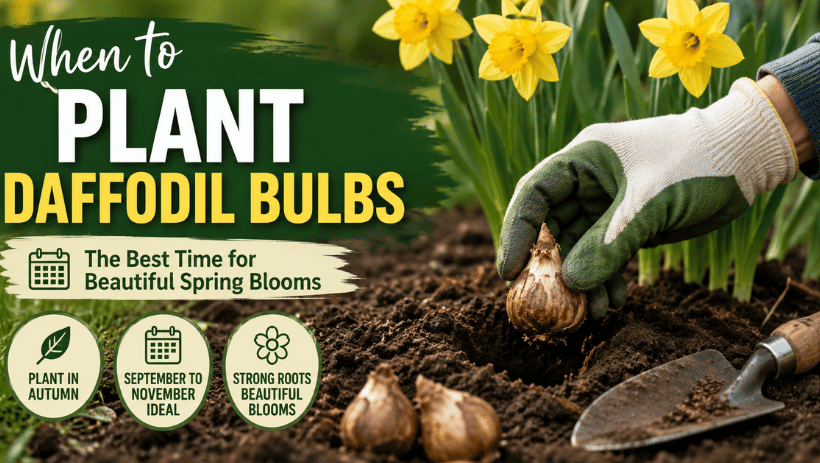
The best time to plant daffodil bulbs is early autumn, with September being ideal across most of the UK. Planting at this point gives the roots time to establish before winter while the soil is still workable. If you’re wondering when to plant daffodil bulbs, this is generally considered the optimal period. You can usually continue planting through October and November. Bulbs may also survive later planting if the ground is not frozen or waterlogged, although their first display may be smaller.
In the UK, plant daffodils in September where possible. October and November are also suitable, provided the soil remains free-draining. Forgotten bulbs can still take root in workable ground during winter, but late planting may delay flowering or produce a weaker display in the first spring. This guidance helps answer the common question of when to plant daffodil bulbs.
| Question (When to Plant Daffodil Bulbs) | Quick Answer |
| Best month | September |
| Usual UK planting window | September to November |
| Latest practical time | December or January if the soil is workable |
| Planting depth | Two to three times the bulb’s height |
| Typical spacing | About 10–15 cm apart |
| Preferred position | Sun or light shade with free-draining soil |
| Flowering period | Usually late winter to spring, depending on the variety |
Key takeaways
- Plant in September for the strongest start.
- Don’t leave purchased bulbs in storage longer than necessary.
- Choose soil that drains freely after rain.
- Set each bulb at roughly two to three times its own height.
- Late bulbs are usually better planted than discarded.
- Keep the foliage until it turns yellow after flowering.
When to Plant Daffodil Bulbs for Reliable Flowers
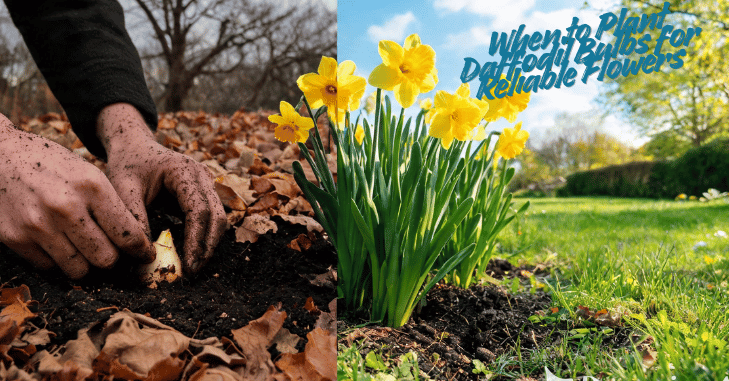
Early autumn is the preferred planting season. The Royal Horticultural Society advises planting in September and recommends getting spring-flowering bulbs into the ground by the end of that month, where possible.
This timing helps each bulb form roots before temperatures fall. It also reduces the period that dormant stock spends drying out in a shed, garage, or cupboard.
September is a guide rather than an absolute deadline. Gardeners in a mild part of southern England may have workable soil well into November. Northern or exposed gardens can cool sooner, so earlier planting often makes sense. For a closer look at this, see Google Classroom Headers.
Use the condition of the soil as your final test. It should be cool, crumbly, and easy to dig. Avoid planting into saturated ground because prolonged wet conditions can encourage rot. The RHS recommends a sunny, well-drained position and warns against waterlogged soil.
Is October or November Too Late?
October is not too late. It remains part of the normal autumn planting period in much of the UK. November can also work well, especially during a mild autumn. The bulbs have less time to establish before the coldest weather, but they can still produce spring growth.
Plant them promptly rather than storing them until conditions seem perfect. Dry bulbs can lose moisture, soften, or develop mold during a long storage period. The RHS advises planting dormant bulbs as soon as possible because delayed planting or lengthy storage may reduce flowering. Choose a dry day and stay off beds where the soil is sticky or compacted. Working heavy ground while it is wet can damage its structure and create poorly drained pockets around the bulbs.
Can You Plant Them in December or January?
Bulbs left unplanted in winter are usually worth saving. Put them in the ground when it is unfrozen, workable, and not saturated. Some UK gardening guidance allows planting into January. Crocus notes that late planting is possible while the ground can still be worked, although the display may not reach its full potential during the first year.
Check each bulb before planting. Keep firm specimens with an intact base. Discard bulbs that are:
- Soft or collapsing
- Badly moldy
- Wet and rotten
- Heavily damaged
- Giving off an unpleasant smell
A late-planted bulb may flower later, produce a shorter stem, or grow leaves without flowering. It can recover in later seasons if it receives suitable care.
How to Plant Daffodils Step by Step

Choose a suitable position
Pick a place that receives sun or light shade during spring. Borders, lawns, raised beds, and outdoor pots can all work.
Good drainage is more important than rich soil. If rainwater sits in the area for long periods, use a raised bed, container, or another part of the garden.
Prepare the soil
Loosen compacted ground with a garden fork. Remove perennial weeds and large stones.
Add garden compost to poor or heavy soil to improve its structure. Grit can help in planting holes in dense clay, but it will not fix a site that remains permanently wet.
3. Set the correct depth
Plant each bulb at about two to three times its own height. A bulb measuring 5cm tall will usually need a hole around 10–15cm deep.
The RHS uses the same two-to-three-times rule for spring bulbs. Its daffodil guide also recommends a depth equal to three times the bulb’s height.
Shallow planting can leave bulbs more exposed to temperature changes and disturbance. It may also contribute to poor flowering over time.
Position and space the bulbs
Place the pointed end upwards and the flatter root plate at the bottom. Don’t worry if the shape makes the top difficult to identify; a bulb can often correct a slightly angled position as it grows. Space standard varieties about 10–15 cm apart. Smaller types can sit closer together, especially in pots. Groups of six or more usually create a stronger display than isolated flowers.
Refill and water
Cover the bulbs with soil and firm the surface gently. Avoid pressing the ground down with your feet.
Water after planting if the soil is dry. Autumn rain will often provide enough moisture after that. Pots still need occasional checks because compost can dry out beneath a sheltered wall or roof.
Planting in Pots
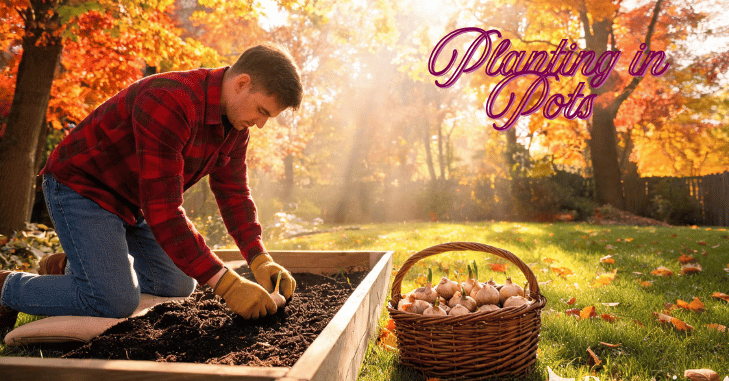
Containers are useful when your garden has heavy soil or limited border space. Choose a pot with open drainage holes and use a free-draining, peat-free compost. Plant at around three times the bulb’s depth for a long-term display. Bulbs can sit closer in a seasonal pot, but they should not touch one another or the sides.
The RHS suggests mixing peat-free compost with grit and keeping containers moist rather than waterlogged. Place the finished pot outdoors. Most garden varieties need winter cold and should not stay in a heated room.
For more practical household and outdoor projects, browse ReadVanta’s Home Improvement guides.
Common Planting Mistakes
Planting in waterlogged ground
Cold, saturated soil limits oxygen around the roots and raises the risk of rot. Move the planting site or improve drainage before adding bulbs.
Planting too shallowly
A shallow bulb may become unstable or produce a poor display. Use the bulb itself as a measuring guide instead of relying on one fixed depth for every variety.
Leaving bulbs in storage for months
Dormant stock is not improved by a long wait. Store it only until the ground becomes suitable, then plant it.
Cutting the leaves too soon
After flowering, the leaves continue making energy for the following season. Leave them until they turn yellow and die back naturally. The RHS says this usually takes about six weeks after flowering. Removing the foliage early can reduce next year’s display.
Overcrowding established clumps
Older clumps may become congested and produce fewer flowers. Lift and divide them after the foliage dies down, then replant the strongest sections at the correct depth.
What to Do After Flowering

Remove faded flower heads if you do not want the plants to set seed. This directs more energy back into the underground bulb. Leave the leaves untouched while they remain green. Don’t tie them into knots, fold them over, or mow them immediately.
Container plants may benefit from a high-potassium feed once growth begins. Stop feeding when the foliage starts to yellow. Keep the compost moist during active growth, then reduce watering as the plant becomes dormant.
If you want to read an interesting article about it, ElectriQ Dehumidifier: The Complete Guide to Features, Reviews, Best Models, Energy Efficiency, Performance, Buying Tips & More
Frequently Asked Questions
Plant them in October or November as soon as the soil is suitable. You can try firm, healthy bulbs later in winter if the ground is neither frozen nor waterlogged.
Dry, dormant bulbs are better planted in autumn. In spring, garden centers may sell potted plants that are already growing. These can be planted before flowering or moved into the garden after their display.
Use a depth equal to two or three times the height of the bulb. This is commonly around 10–15cm, but larger varieties may need a deeper hole.
They flower well in the sun and can tolerate light shade. Avoid deep shade and positions where the soil stays wet.
No soaking is normally needed. Plant firm, dry bulbs directly into prepared ground and water if the soil is dry.
They may flower, but the first display can be delayed or reduced. Leave their foliage in place after flowering so the plants can build strength for the next season.
Plan Your Autumn Planting
Aim to buy and plant your bulbs in September, then use October and November as a practical backup window. Check the drainage, measure the depth from the size of each bulb, and group several together for a more natural display.
ReadVanta publishes accessible advice across home projects and everyday topics. You can learn more about the publication on the ReadVanta About page or explore the site’s latest practical guides.
Conclusion
Knowing when to plant daffodil bulbs is one of the most important steps to enjoying a healthy and colorful spring display. September is the ideal time across most of the UK, although October and November also provide excellent planting conditions if the soil remains well-drained. Even bulbs planted later in winter can still establish and flower, although the first display may be less vigorous.
By choosing a suitable location, planting at the correct depth, and providing simple aftercare, gardeners can enjoy reliable blooms year after year. If you are still wondering when to plant daffodil bulbs, remember that planting as early as possible in autumn gives your bulbs the best chance to develop strong roots and produce beautiful spring flowers.