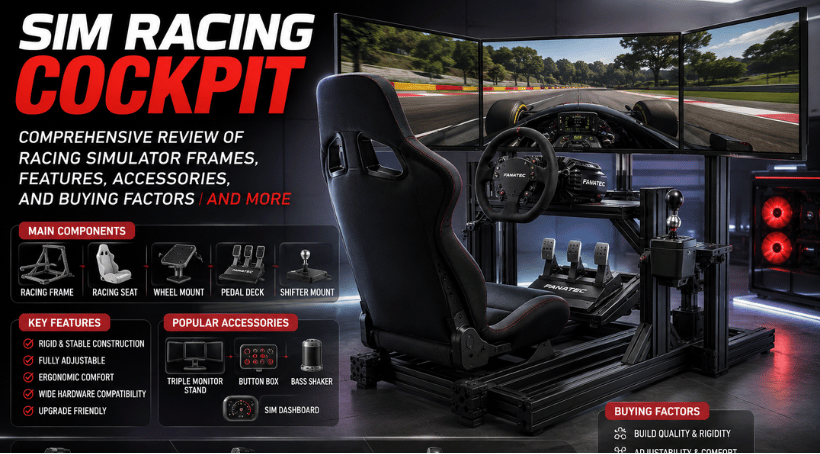
A sim racing cockpit is a structured frame system that replicates the seating position and control layout of a real racing car for a realistic driving experience. It securely mounts key components like the steering wheel, pedals, shifter, monitor, and racing seat in a stable, ergonomic setup.
Unlike a basic desk setup, it provides rigid stability and full adjustability for wheel, pedals, seat, and screen positioning. Moreover, this improves control accuracy, reduces fatigue, and ensures consistent performance for all levels of sim racers.
Sim racing cockpits range from foldable entry-level rigs to advanced aluminum-profile, motion-supported setups. Additionally, they consist of key components such as the frame, seat, wheel mount, pedal deck, and shifter mounts to create a complete simulation system.
| Feature / Aspect | Description |
| Definition | A structured frame system that replicates a real racing car seating position and control layout. |
| Main Purpose | To provide a realistic, stable, and immersive racing simulation experience. |
| Key Components | Racing frame, seat, wheel mount, pedal deck, shifter mount, and monitor setup. |
| Stability | Prevents flex and movement even under strong force feedback and heavy braking. |
| Adjustability | Allows customization of wheel height, pedal angle, seat position, and monitor placement. |
| Types Available | Foldable entry-level rigs, mid-range steel frames, and premium aluminum/motion setups. |
| Materials Used | Steel (budget), aluminum extrusion (premium), carbon fiber (advanced builds). |
| Key Benefits | Improves control accuracy, reduces fatigue, and enhances racing consistency. |
| Popular Accessories | Monitor stands, button boxes, sim dashboards, bass shakers, keyboard trays. |
| Ideal Users | Beginners, enthusiasts, and professional esports sim racers. |
| Price Range | From budget-friendly entry rigs to high-end motion simulator systems. |
| Upgrade Potential | High-end aluminum rigs support long-term customization and expansion. |
| Common Use | Sim racing, esports training, and realistic driving simulation setups. |
What Is a Sim Racing Cockpit?

A sim racing cockpit is a structured frame system that replicates the seating position and controls of a real racing car for a realistic driving experience. It securely holds key equipment, such as the steering wheel, pedals, shifter, monitor, and racing seat, in a stable, ergonomic setup.
Unlike a basic desk setup, a sim racing cockpit provides stability and prevents flex even under strong force feedback and heavy braking. However, it also allows full adjustability of the wheel, pedals, seat, and monitor for realistic racing ergonomics.
This reduces fatigue and improves control accuracy and consistency during long racing sessions. Sim racing cockpits range from foldable entry-level rigs to advanced aluminum setups, with some supporting motion platforms, triple monitors, and VR for greater realism.
Main Components of a Sim Racing Cockpit
A complete cockpit consists of several essential components.
Racing Frame
- The frame serves as the structural backbone of the setup. It supports all mounted equipment and contributes to the rig’s rigidity.
Racing Seat
- Bucket seats
- Reclining seats
- Formula-style seats
- Hybrid racing seats
Wheel Mount
- The wheel mount secures the steering wheel base. High-end mounts are designed to withstand strong force feedback systems.
Pedal Deck
- The pedal platform holds accelerator, brake, and clutch pedals while allowing adjustment for different driving positions.
Setting Up a Sim Racing Cockpit
Proper setup is essential for comfort and performance.
Seat Position
- Adjust the seat so that your knees remain slightly bent when pressing pedals.
Wheel Placement
- Position the steering wheel at chest level with elbows slightly bent.
Pedal Adjustment
- Pedals should allow comfortable foot movement without excessive stretching.
Monitor Alignment
- Place monitors at eye level to reduce neck strain.
Cable Organization
- Secure cables to prevent tangling and maintain a professional appearance.
Shifter Mount
- Many cockpits include side-mounted gear shifters and handbrakes.
Materials Used in Sim Racing Cockpits
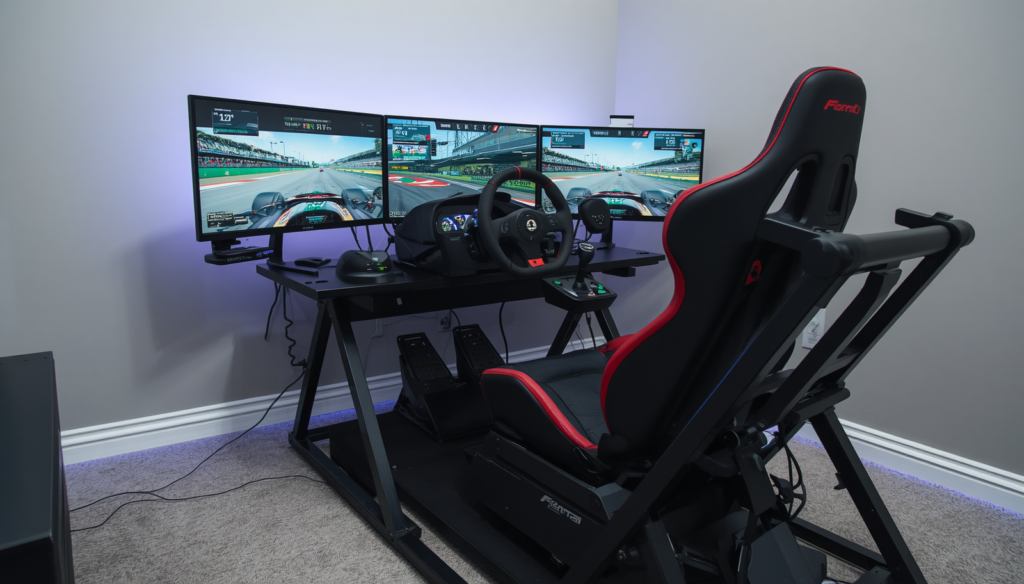
Sim racing cockpits are built using different materials that directly affect their strength, durability, and overall performance. The most common material is steel, widely used in entry-level and mid-range cockpits for its affordability and solid structural strength.
Steel frames offer good stability for basic and intermediate sim racing setups but have limited upgrade flexibility. However, aluminum extrusion profiles are preferred for high-end cockpits due to their superior rigidity, lightweight design, and modular customization options.
Some advanced rigs use carbon fiber or reinforced composites to improve durability while keeping a sleek, modern design. Additionally, each material is chosen to balance cost, performance, and long-term usability for sim racing enthusiasts.
Popular Accessories for a Sim Racing Cockpit
A sim racing cockpit can be enhanced with accessories that improve realism, comfort, and overall functionality. However, a monitor stand, especially for triple-screen or ultrawide setups, is one of the most popular additions, as it expands the field of view and increases immersion.
Keyboard trays, button boxes, and sim dashboards improve control access and make setup navigation easier with real-time telemetry. Moreover, Bass shakers and simple add-ons like cup holders and cable management enhance realism, comfort, and overall cockpit organization.
Price Range of Sim Racing Cockpits
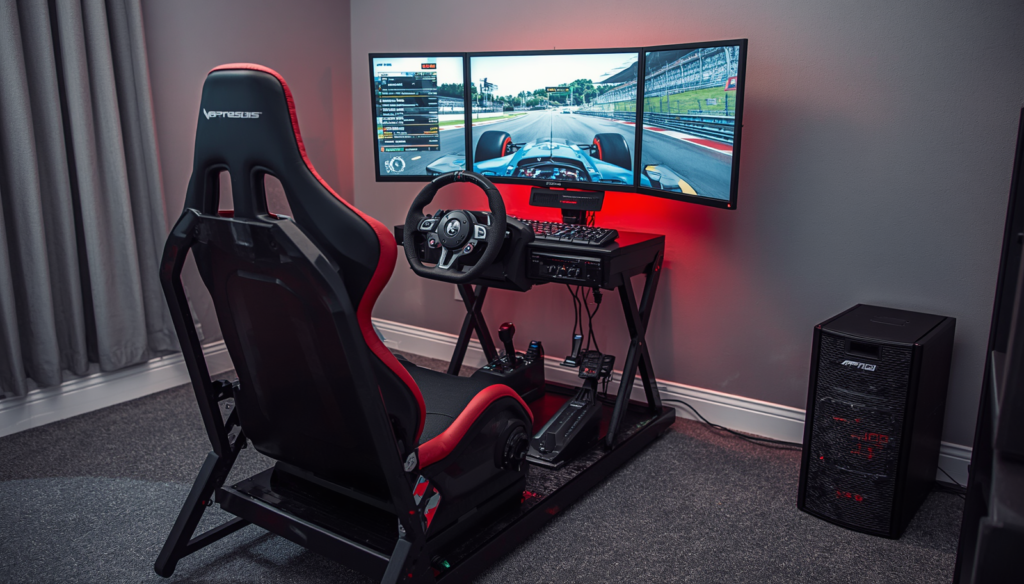
The price of a sim racing cockpit varies widely depending on its build quality, materials, and features. Moreover, Entry-level foldable or basic steel-frame cockpits typically start at a lower price range, making them ideal for beginners who want an affordable introduction to sim racing.
Mid-range sim racing cockpits offer solid stability and adjustability at a moderate price, ideal for enthusiasts. Moreover, Premium aluminum and motion rigs cost more due to higher rigidity, customization, and professional-grade features, depending on realism and expandability.
Sim Racing Cockpit Maintenance Tips
- Regularly clean the frame, seat, and mounted equipment to prevent dust buildup.
- Check and tighten bolts and screws to maintain stability and safety.
- Inspect adjustable parts for wear and ensure smooth operation.
- Keep cables organized to avoid tangling and damage.
- Clean and maintain the pedals, wheelbase, and shifter for consistent performance.
- Avoid placing heavy stress on joints beyond recommended limits.
Common Mistakes When Buying a Sim Racing Cockpit
Many buyers choose a sim racing cockpit solely on price, rather than quality or long-term value. Overall, a common mistake is selecting a weak frame that lacks rigidity, leading to flex and reduced performance during intense racing sessions.
Another mistake is ignoring hardware compatibility and space requirements when choosing a sim racing cockpit. However, buyers also overlook adjustability, comfort, and upgrade potential, which can limit long-term usability and performance.
Essential Features to Look For in a Sim Racing Cockpit

When choosing a sim racing cockpit, key features like performance, comfort, and long-term usability are essential. Moreover, rigidity is especially important, as a strong, stable frame prevents flex during force feedback and heavy braking for consistent control.
Adjustability allows users to fine-tune wheel, pedals, seat, and monitor positions for better ergonomics. Additionally, Compatibility, build quality, cable management, and upgrade options ensure long-term usability and future hardware support.
Conclusion
A sim racing cockpit is an essential investment for a realistic and immersive racing simulation experience. Additionally, it offers a stable, ergonomic, and adjustable setup that improves control accuracy, comfort, and consistency compared to a basic desk setup.
It securely mounts key components to create a realistic driving position that improves comfort and performance. Moreover, with options ranging from basic foldable rigs to advanced aluminum and motion systems, users can choose a cockpit that fits their budget and needs.
Each type offers varying rigidity, customization, and upgrade potential, allowing users to start simple and expand over time. Additionally, with the right accessories, a sim racing cockpit delivers deeper immersion, long-term usability, and a more professional racing experience.
Want to know about Oura Ring UK: Complete Guide to Features, Full Specifications, Price Breakdown, Pros & Cons, and Whether It’s Truly Worth It for Sleep Check out our Tech category.
FAQs
A sim racing cockpit is a solid, purpose-built frame for racing hardware that delivers greater comfort and performance than a desk setup, which is often temporary and unstable under force feedback.
Space requirements depend on the model. Foldable rigs need minimal space, while full-aluminum or triple-monitor setups require a dedicated area, similar to a small workstation or gaming room.
Yes. Good ergonomics and a stable seating position reduce strain on the back, legs, and arms, making long racing sessions more comfortable and less tiring.