Vision plays a crucial role in everyday life, influencing everything from reading and driving to working and enjoying hobbies. However, age-related vision changes, cataracts, and refractive errors can gradually reduce visual clarity and independence. Lens replacement surgery has emerged as one of the most advanced and effective solutions for individuals seeking long-term vision correction.
By replacing the eye’s natural lens with a customized artificial intraocular lens (IOL), this procedure can significantly improve eyesight, reduce dependence on glasses or contact lenses, and enhance overall quality of life. Whether performed to treat cataracts or correct age-related focusing problems, lens replacement offers a safe, reliable solution.
| Aspect | Details |
| Procedure Name | Lens Replacement Surgery (RLE/Clear Lens Extraction) |
| Purpose | Replace the eye’s natural lens with an artificial intraocular lens (IOL) |
| Treats | Cataracts, presbyopia, nearsightedness, farsightedness, and astigmatism |
| Lens Types | Monofocal, Multifocal, and Toric Lenses |
| Procedure Time | Usually less than 30 minutes per eye |
| Anesthesia | Local anesthetic eye drops. |
| Hospital Stay | Outpatient procedure (same-day discharge) |
| Main Benefits | Clearer vision, reduced dependence on glasses, permanent vision correction |
| Ideal Candidates | Adults over 40, cataract patients, and those unsuitable for LASIK |
| Recovery Time | Most daily activities resume within a week. |
| Potential Risks | Infection, inflammation, dry eyes, glare, increased eye pressure, rare retinal detachment |
| Long-Term Results | Permanent lens implant with long-lasting vision improvement |
| Follow-Up Care | Regular eye examinations to monitor overall eye health |
| LASIK Alternative | Often preferred for older adults and patients with presbyopia. |
| Key Advantage | Prevents future cataracts while correcting vision problems |
What Is Lens Replacement Surgery?
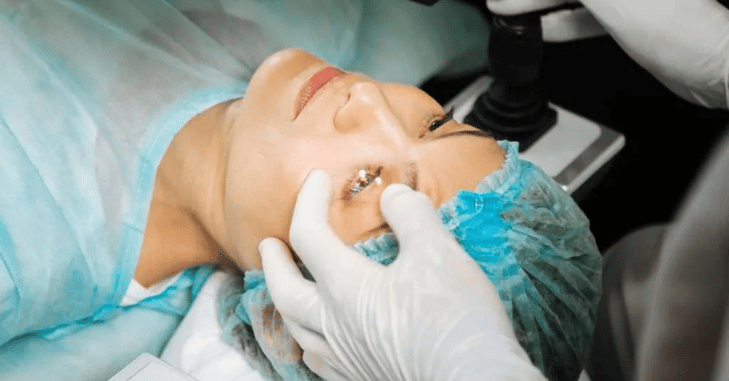
Lens replacement surgery, also known as Refractive Lens Exchange (RLE) or Clear Lens Extraction, is a procedure in which the eye’s natural lens is removed and replaced with an artificial lens implant. The procedure is very similar to cataract surgery, except it may be performed even before cataracts develop.
The artificial lens is carefully selected based on the patient’s vision needs and can correct nearsightedness, farsightedness, astigmatism, and age-related focusing problems. Once implanted, the artificial lens remains in place permanently and does not require replacement.
Why Is Lens Replacement Surgery Performed?
- Cataracts causing blurry vision
- Presbyopia (difficulty focusing on nearby objects)
- Severe farsightedness
- High levels of nearsightedness
- Astigmatism
- Desire to reduce dependence on glasses or contact lenses
- Ineligibility for LASIK or other laser vision correction procedures
Types of Intraocular Lenses (IOLs)
Monofocal Lenses
Monofocal lenses are the most commonly used intraocular lenses in lens replacement. These lenses are designed to provide clear vision at a single focal point, typically for distance vision. Patients who choose monofocal lenses often enjoy improved clarity for activities such as driving, watching television, and outdoor tasks.
Multifocal Lenses
Multifocal lenses are advanced intraocular lenses that provide vision correction across multiple distances, including near, intermediate, and distant. These lenses contain specialized optical zones that allow the eye to focus on objects at different distances without frequent changes to eyewear.
Toric Lenses
Toric lenses are specially designed intraocular lenses that correct astigmatism in addition to other refractive errors. Astigmatism occurs when the cornea has an irregular shape, causing blurred or distorted vision at various distances. Toric lenses help compensate for this irregularity, resulting in sharper and more precise vision. These lenses are carefully aligned during surgery to match the unique curvature of the patient’s eye.
How Does Lens Replacement Surgery Work?

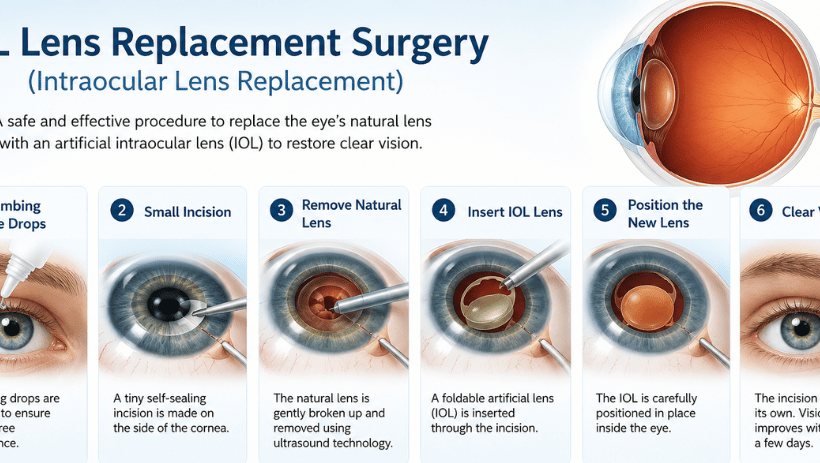
The surgery is typically performed on an outpatient basis and usually takes less than 30 minutes per eye.
The process generally includes:
- Administration of anesthetic eye drops.
- Creation of a tiny incision in the eye.
- Removal of the natural lens using ultrasound technology.
- Insertion of the artificial intraocular lens.
- Closure of the incision, which often heals naturally without stitches.
Patients remain awake during the procedure but experience little to no discomfort.
Benefits of Lens Replacement Surgery
Improved Vision Quality
One of the most significant benefits of lens replacement surgery is the dramatic improvement in vision quality. After the recovery period, many patients notice sharper, brighter, and clearer vision than they have experienced in years. Colors often appear more vibrant, and everyday activities such as reading signs, driving, watching television, and recognizing faces become much easier.
Reduced Dependence on Glasses
Lens replacement can greatly reduce or even eliminate the need for glasses or contact lenses, depending on the type of intraocular lens selected. Advanced lens options, such as multifocal and extended depth-of-focus lenses, allow patients to see clearly at multiple distances, making everyday tasks more convenient.
Permanent Solution
Unlike glasses and contact lenses, which require regular updates and maintenance, lens replacement offers a permanent vision correction solution. The artificial intraocular lens implanted during the procedure is designed to remain in the eye for life and does not wear out.
Who Is a Good Candidate for Lens Replacement Surgery?

A person may be a suitable candidate if they:
- Are over the age of 40
- Have presbyopia or age-related vision changes
- Have cataracts affecting vision
- Are not ideal candidates for LASIK
- Have stable eye health
- Desire a long-term vision correction solution
A comprehensive eye examination is necessary to determine eligibility.
Recovery After Lens Replacement Surgery
Recovery Tips
- Use prescribed eye drops as directed.
- Avoid rubbing the eyes.
- Wear protective eyewear when recommended.
- Avoid swimming and strenuous activities during the initial healing period.
- Attend all follow-up appointments.
Most individuals return to normal activities within a week, although complete healing may take several weeks.
Potential Risks and Complications
Although lens replacement surgery is considered a safe and highly successful procedure, it is important to understand that, like any surgery, it carries certain risks and potential complications. Most patients recover without significant issues, but some may experience temporary side effects such as dry eyes, mild inflammation, glare, or halos around lights, particularly during the healing process.
In rare cases, more serious complications can occur, including infection, increased eye pressure, retinal detachment, or displacement of the implanted lens. Fortunately, these complications are uncommon and can often be effectively managed when detected early.
Lens Replacement Surgery vs. LASIK
| Feature | Lens Replacement Surgery | LASIK |
| Treats Presbyopia | Yes | Limited |
| Prevents Cataracts | Yes | No |
| Removes Natural Lens | Yes | No |
| Suitable for Older Adults | Excellent | May Be Limited |
| Permanent Lens Implant | Yes | No |
Cost of Lens Replacement Surgery
- Geographic location
- Surgeon experience
- Type of intraocular lens selected
- Facility fees
- Follow-up care requirements
Premium multifocal and toric lenses generally cost more than standard monofocal lenses due to their advanced vision correction capabilities.
Long-Term Results

The results of lens replacement surgery are typically long-lasting. Most patients enjoy stable vision for many years after the procedure. Because the artificial lens does not age like the natural lens, patients are also protected from future cataract development.
Even after successful lens replacement surgery, regular eye examinations remain essential for maintaining long-term eye health. While the procedure can correct vision problems and prevent future cataracts, it does not eliminate the risk of developing other eye conditions.
Conclusion
Lens replacement surgery represents a remarkable advancement in modern eye care, offering patients an opportunity to enjoy clearer, sharper vision for years to come. From correcting common refractive errors and presbyopia to preventing future cataracts, the procedure provides numerous benefits that can greatly improve daily life.
Although every surgical procedure carries some risks, the high success rate, long-lasting results, and availability of advanced intraocular lens options make lens replacement an attractive choice for many individuals. By consulting an experienced eye specialist and maintaining regular post-surgery eye examinations, patients can maximize their visual outcomes and protect their eye health.
Want to know about Vagus Nerve Exercises: A Complete Guide to Calming the Body, Reducing Stress, and Restoring Natural Balance Check out our Health category.
FAQs
No. The procedure is typically painless because anesthetic eye drops are used to numb the eye.
The surgery usually takes between 15 and 30 minutes per eye.
No. Since the natural lens is removed, cataracts cannot develop again in the treated eye.
Many patients resume normal daily activities within a few days, although complete healing may take several weeks.
Artificial intraocular lenses are designed to be permanent and typically last a lifetime without needing replacement.