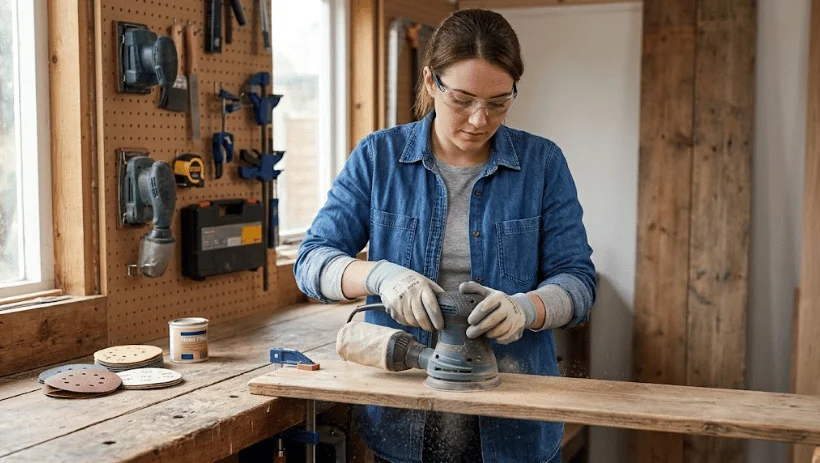
A powered sander can turn a slow preparation job into a much quicker one. The harder part is choosing the right machine for your surface, finish and budget. UK buyers should also consider dust extraction, disc availability, and whether a cordless model is worth the extra cost. More from us: Radiator Pipe Covers.
Quick answer: An orbital sander is a handheld power tool for smoothing wood, removing light coatings and preparing surfaces for paint or varnish. For most UK DIY jobs, a 125mm random-orbit model gives a useful balance of sanding speed and surface finish. Look for effective dust extraction, comfortable handling and readily available abrasive discs.
Key Facts at a Glance
| Feature | What to Know |
|---|---|
| Best all-round type | 125mm random-orbit model |
| Good for | Timber, furniture, doors, worktops and paint preparation |
| Common disc size | 125mm for many DIY machines |
| Coarse sanding | Around 40 to 80 grit |
| General preparation | Around 80 to 120 grit |
| Fine finishing | Around 180 to 240 grit |
| Corded advantage | Continuous power and lower purchase cost |
| Cordless advantage | Easier movement away from a socket |
| Useful features | Variable speed, dust extraction, low vibration |
| Main limitation | Round pads cannot reach square internal corners |
Which Type of Sander Should You Choose?
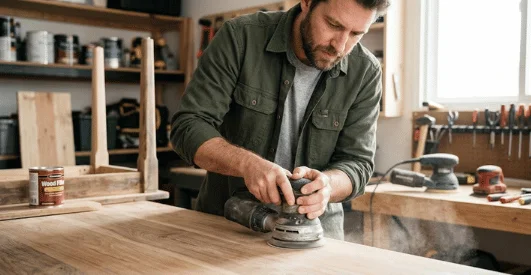
Not every powered sander behaves in the same way. The sanding pad’s movement changes how quickly material comes off and how easy it is to produce a clean finish.
| Type | Best For | Pros | Cons |
|---|---|---|---|
| Random-orbit model | General DIY, furniture, doors and worktops | Fast material removal, good finish, versatile | Round pad cannot reach corners |
| Sheet-orbit finishing model | Flat timber and final preparation | Controlled finish, can use sheet abrasives | Slower on heavy removal |
| Detail sander | Corners, frames and small areas | Reaches tight spaces, easy to control | Slow on large surfaces |
| Belt sander | Heavy stripping and rough timber | Removes material quickly | Easier to gouge wood or remove too much |
Recommendation: a 125mm random-orbit machine is the most useful starting point for most homeowners. It handles enough material for renovation work while still producing a fine finish with the correct abrasive.
A sheet finishing machine makes more sense if most of your work involves flat surfaces and light preparation. Choose a belt machine only when rapid stock removal matters more than delicate finishing.
How to Choose an Orbital Sander for UK DIY Work
Start With the Jobs You Plan to Do
A machine bought for occasional furniture restoration doesn’t need the same specification as one used every week in a workshop.
For common household jobs, think about which of these tasks you expect to do.
- Prepare timber before painting
- Remove old varnish or a light finish
- Smooth filled or repaired areas
- Restore wooden furniture
- Prepare doors or worktops
- Sand between finishing stages
Large, flat surfaces favour a wider pad. Smaller tools can feel easier to control around narrow furniture components.
Look at Pad Size and Abrasive Availability
A 125mm circular pad is common across many random-orbit machines sold by UK tool retailers. Larger 150mm machines cover more surface with each pass and are common among higher-priced or trade-focused options.
Check abrasive availability before buying. Hook-and-loop discs make grit changes quick, but the dust-hole pattern should also suit the backing pad.
Buying a machine with an unusual disc size can leave you hunting for compatible abrasives later.
Decide Between Corded and Cordless
Corded models make sense when you normally work in a garage, shed or room with easy access to mains power. You don’t need to manage battery runtime, and entry prices can be lower.
Cordless machines are useful for work around a property or on a site without a convenient socket. They make the most financial sense when you already own batteries from the same tool platform.
Current UK listings show why the battery question matters. Corded random-orbit machines start around £30, while branded models commonly rise above £100. Cordless bare tools can start around £40 and climb above £140 before you add a battery or charger. Specialist models can cost £200 or more. Prices change, so treat these figures as a September 2026 market snapshot.
Prioritise Dust Extraction
Sanding creates fine dust, and the small collection box supplied with a tool shouldn’t be your only buying consideration.
Look for a machine that can connect securely to suitable extraction equipment. Good extraction also helps stop loose dust from building up between the abrasive and the workpiece.
The Health and Safety Executive says sanding wood with power tools can create significant dust levels. Its workplace guidance prioritises on-tool extraction and suitable respiratory protective equipment where required.
If you’re renovating several rooms, you can also browse Readvanta’s Home Improvement guides for related household projects.
Check Speed Control and Vibration
Variable speed gives you more control when switching between materials or moving from aggressive preparation to finer finishing.
Low vibration matters during longer sessions. Excess vibration makes a tool tiring to hold and can make controlled passes harder.
Don’t choose on wattage alone. Grip shape, balance, extraction, and abrasive availability often affect day-to-day use more than a small difference in motor rating.
Choosing the Right Sandpaper Grit
Grit numbers describe abrasive coarseness. Lower numbers are more aggressive, while higher numbers create a finer scratch pattern.
| Grit Range | Typical Use |
|---|---|
| 40 to 60 | Heavy stripping and rough timber |
| 80 | Initial smoothing and removing surface marks |
| 120 | General preparation before finishing |
| 180 | Fine preparation |
| 220 to 240 | Fine finishing and some between-coat work |
The correct sequence depends on the material and finish. Jumping straight from a coarse abrasive to a fine one can leave deeper scratches visible underneath the final surface.
For many timber projects, starting at 80 grit and progressing through 120 and 180 gives better control than trying to do the whole job with one abrasive.
Old coatings need extra care. Electrical Safety First specifically advises against sanding lead-based paint because of the poisoning risk.
How to Use the Tool Without Leaving Swirl Marks
Good technique matters as much as the machine.
- Secure the workpiece. Stop timber or furniture components from moving while you work.
- Fit the correct abrasive. Align extraction holes where the pad design requires them.
- Start with a suitable grit. Don’t begin aggressively unless the surface needs heavy removal.
- Keep the pad flat. Tilting onto an edge can create dips and uneven marks.
- Use gentle pressure. Let the machine and abrasive remove the material.
- Overlap each pass. Move steadily across the surface rather than lingering in one area.
- Inspect between grits. Remove dust and check for scratches before moving to a finer abrasive.
- Finish before lifting. Follow the manufacturer’s instructions for switching off and handling the machine safely.
Electrical Safety First also recommends gentle pressure and keeping the workpiece properly secured. It advises users to wear eye, hearing, and dust protection and to unplug mains tools before maintenance.
Common Sanding Mistakes to Avoid
Pressing Down Too Hard
Extra pressure doesn’t automatically speed up the job. It can slow the pad’s intended movement, wear abrasives quickly, and make the finish less consistent.
Guide the machine rather than forcing it.
Using One Grit for the Whole Project
A coarse disc removes material efficiently but leaves scratches. A fine disc can take far too long to remove an old finish.
Work through sensible grit stages instead.
Ignoring Dust Holes
If the disc holes don’t align with the pad, dust extraction becomes less effective. Check alignment every time you change an abrasive.
Starting the Finish Before Removing Scratches
Paint, oil, or varnish doesn’t hide every sanding mark. Inspect timber under good lighting before applying a finish.
Trying to Reach Every Corner With a Round Pad
The edge of a round pad isn’t a substitute for a detail tool or hand sanding. Using it aggressively near corners can damage adjacent areas.
Is a More Expensive Model Worth It?
Price matters less than how often you use the machine. For occasional furniture and decorating work, a straightforward corded model can be enough. Frequent users may benefit from lower vibration, stronger extraction, variable speed, and better ergonomics.
A cordless tool can be good value when its battery system matches equipment you already own. A bare machine becomes much less attractive if you also need a new battery and charger.
For a major property refurbishment, tool costs are only one part of the budget. If you are weighing up how to pay for larger works, Readvanta’s guide to whether equity release is a good idea sets out the main considerations.
Moisture can also affect decorating and renovation schedules. If damp or condensation is slowing work, Readvanta’s guide to ElectriQ dehumidifiers explains common moisture-control options for UK homes.
Safety Matters More Than Sanding Speed
Wear suitable eye and hearing protection, keep loose clothing away from moving parts and follow the manufacturer’s instructions.
Wood dust deserves particular attention. HSE workplace guidance says to use on-tool extraction to control wood dust and notes that suitable respiratory protection may also be needed. For many construction sanding operations, its guidance specifies FFP3-level protection rather than basic nuisance-dust masks.
The requirements for professional workplaces and occasional home DIY aren’t identical. Still, the basic lesson is useful: don’t treat fine sanding dust as harmless. When switching from timber to metal, empty sawdust from the tool and extraction system first. Electrical Safety First warns that sanding metal creates sparks.
Final Verdict
For most UK DIY users, start with a 125mm random-orbit machine with hook-and-loop discs, effective extraction and a comfortable grip. Variable speed is worth having when your projects range from removal work to fine finishing.
Choose corded if predictable power and value matter most. Choose cordless if mobility is more useful and you already own compatible batteries.
The abrasive matters too. Match the grit to the job, progress through sensible stages and resist the temptation to press down hard. A modest machine used correctly can produce a cleaner result than an expensive one used with poor technique.
Frequently Asked Questions
What is an orbital sander used for?
It is mainly used to smooth surfaces, prepare timber for paint or varnish, remove light coatings and refine repaired areas. The exact jobs depend on the pad movement, abrasive grit, and material being worked.
Is a random-orbit model better than a sheet finishing model?
For most general DIY work, the random-orbit design is faster and more versatile. A sheet finishing machine can offer more control for light work on flat surfaces and may reach closer to straight edges.
Can you use one to remove paint?
With the right abrasive, it can remove many conventional surface coatings. Don’t mechanically sand a coating if you suspect it contains lead. Seek appropriate specialist guidance instead.
What grit should beginners start with?
There is no single starting grit for every job. Around 80 grit is common for initial timber preparation, while 120 or finer may suit surfaces that are already fairly smooth.
Is corded or cordless better?
Corded machines suit longer sessions near a socket and often cost less upfront. Cordless models make movement easier, particularly when you already own batteries from the same manufacturer.
Can you use a powered sander on walls?
Some sanders can be used for limited wall preparation, depending on the surface and manufacturer’s instructions. Dust can be substantial, so suitable extraction and protection are essential.
Your Next Step
Choose the machine around the projects you expect to tackle, not the highest power figure on the box. Compare pad size, extraction, vibration, abrasive cost, and the total battery-system price before buying. Then match the grit and technique to the surface you want to finish.