Bare copper pipes can make an otherwise well-finished radiator installation look incomplete, especially after new flooring, decorating, or a radiator upgrade. Radiator pipe covers provide a simple way to conceal those exposed sections without rerouting the heating system or boxing in the entire radiator. Available in white, chrome, black, anthracite, brass, and other finishes, they can turn a small plumbing detail into part of the room design.
For most UK homeowners, the main decision isn’t whether pipework can be covered, but which sleeve and collar will fit properly. Pipe diameter, exposed length, installation method and the position of the radiator valve all affect what you should buy. Getting those details right matters more than simply choosing the colour that looks best.
This guide explains the different types of pipe cover, common UK sizes, materials, costs and fitting methods. It also covers how to measure existing pipes, when clip-on designs are preferable and when a solid sleeve may need to be installed alongside the radiator or valve.
Quick answer: Radiator pipe covers are decorative sleeves and floor collars that hide exposed copper or plastic pipework between the floor or wall and a radiator valve. In UK homes, 15mm is a common size. Split clip-on covers are easiest to retrofit, while solid sleeves generally need access to the pipe end during installation.
What Are Radiator Pipe Covers?
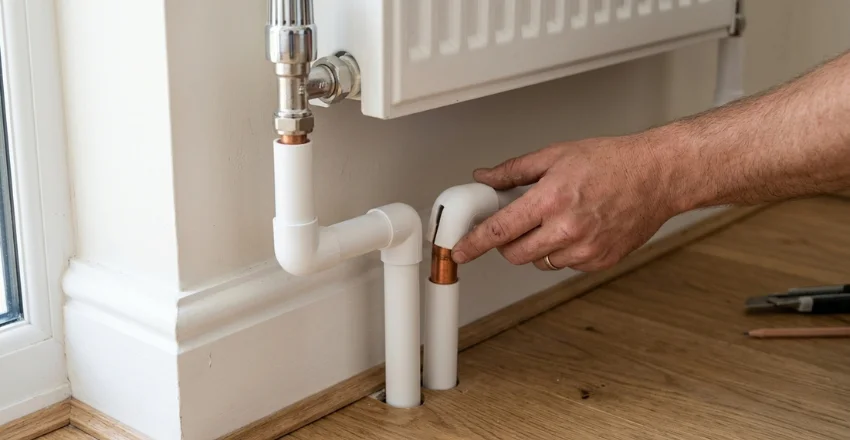
These covers are narrow decorative sleeves placed around the visible heating pipes connected to a radiator. They are also sold as radiator pipe sleeves, shrouds,s or covers, while the circular trim around the point where a pipe enters the floor is normally described as a pipe collar or floor plate. Together, the two parts hide exposed copper and untidy openings around the floor.
Don’t confuse them with full radiator cabinets or foam pipe insulation. A decorative cover generally changes the appearance of the short visible pipe section rather than insulating the heating system or enclosing the radiator itself. Many products are designed specifically to coordinate with radiator valves, towel rails, ls and designer radiators.
Which Type of Radiator Pipe Cover Should You Choose?
Different products can look similar online, even though their fitting methods differ. A cover intended for a new radiator installation may be inconvenient to add after the valves have already been fitted, whereas a split sleeve can usually clip around existing pipework. Checking the construction before ordering can therefore save unnecessary plumbing work.
| Type | How it fits | Best for | Main consideration |
|---|---|---|---|
| Split or clip-on sleeve | Opens or snaps around an existing pipe | Retrofitting an existing radiator | Seam may be visible from some angles |
| Solid sleeve | Slides over the end of the pipe | New radiator or valve installation | Usually needs fitting before the valve blocks access |
| Pipe collar only | Clips or slides around the pipe at floor level | Hiding gaps in laminate, wood, vinyl or carpet | Does not cover the vertical pipe |
| Sleeve-and-collar kit | Covers both the pipe and floor opening | Creating a complete matching finish | Check pipe diameter and sleeve length |
| Metal or brass shroud | Slides over or around the pipe depending on design | Premium and designer radiators | Usually costs more than plastic |
Clip-on products are particularly useful when the radiator is already installed because some can be fitted without disconnecting the pipework. Solid covers create a continuous finish but frequently need to be positioned before a radiator valve prevents the sleeve from sliding over the pipe. UK retailer specifications show both arrangements are widely available, so always check the installation type rather than assume it.
What Size Pipe Cover Do You Need?
Start by measuring the outside diameter of the existing pipe rather than estimating it from appearance. 15mm pipework is extremely common for UK radiator connections, although 10mm pipework and other sizes are also found, particularly in systems using smaller-bore heating pipe. Retailers consequently offer collars and sleeves in several diameters rather than one universal specification.
Next, measure the visible section from the finished floor or wall to the point where the pipe reaches the radiator valve. Covers come in different lengths, with examples around 130mm, 200mm, and 300mm available from UK suppliers, and many sleeves can be trimmed where needed. Remember that the measurement should relate to the finished floor level if you will still install new laminate, tiles, or other flooring.
You should also check the collar’s outside diameter. A collar needs to be wide enough to disguise the cut-out or rough edge surrounding the pipe, particularly after laminate or wooden flooring has been fitted. An accurately sized sleeve with a collar that is too small can still leave the floor opening visible.
Choosing the Best Finish for Your Room
White pipe sleeves are among the easiest options to blend into traditional white skirting boards, walls and standard panel radiators. Chrome works particularly well when radiator valves, taps, handles or other nearby fittings already use a polished metallic finish. Black and anthracite have become practical choices for dark designer radiators because they prevent a bright copper pipe from interrupting the overall look.
Brushed brass, antique brass, copper and other warmer metallic finishes can work better in rooms where hardware is intended to be a noticeable design feature. Wood-effect collars can also help floor penetrations blend into oak or laminate rather than making the pipe itself the focal point. The best result usually comes from deliberately matching either the radiator and valve or the surrounding floor and room finishes, rather than introducing an unrelated third colour.
Bathrooms deserve particular attention because towel radiators often leave pipe connections highly visible against tiles or decorated walls. Coordinating the covers with the valve, towel rail and other metal fittings can make a small room feel more considered, while the surrounding materials should still be appropriate for a humid environment. If you are planning the wider room at the same time, Readvanta’s bathroom wallpaper guide for UK homes covers moisture-resistant finishes and bathroom styling in more detail.
How to Fit Clip-On Pipe Sleeves
Retrofitting is easiest when the sleeve has a split or snap-on construction. Before starting, switch off the heating and let the exposed pipework cool enough to handle comfortably. Clean dried paint, dust, and debris from the visible pipe because an uneven surface can stop a cover from closing or sitting neatly.
Measure the exposed pipe from the finished floor to the underside of the radiator valve.
Mark the required sleeve length and trim it using the manufacturer’s recommended cutting method.
Remove any rough cut edges that would prevent the sleeve from sitting squarely.
Carefully open or flex the split cover and position it around the existing pipe.
Close the sleeve and rotate its seam towards the wall or another less visible angle where possible.
Fit the matching split collar around the base of the pipe.
Check that the collar sits flat and that neither part interferes with the radiator valve or normal pipe movement.
The precise process varies between products, so manufacturer instructions should take priority over a generic fitting method. Some plastic designs simply snap around existing pipework, while certain metal systems use different joints or floor plates. Retailer fitting guidance confirms that suitable split systems can often be installed without draining or disconnecting the radiator.
What About Solid Metal Sleeves?
A solid sleeve has no longitudinal split, so it has to slide over an accessible pipe end. That usually makes it easiest to install while the radiator and its valves are being fitted rather than after the whole system has been completed. Some manufacturer and retailer instructions specifically state that their solid covers need to be positioned before the radiator valve prevents access.
Retrofitting such a design can involve removing a valve and dealing with water in the heating circuit. That changes the task from a simple decorative DIY job into plumbing work where leaks are possible if a connection is disturbed or reassembled incorrectly. If you are not confident working on a wet central-heating system, choosing a split cover or asking a competent heating professional to fit the solid sleeve is usually more sensible.
How Much Do Radiator Pipe Covers Cost in the UK?
Pipe covers are generally one of the cheaper finishing details in a room, but material and construction make a noticeable difference to price. Current UK listings show simple 15mm plastic clip-on sleeve sets around £6, while sleeve-and-collar kits in coloured or premium finishes can cost noticeably more. Designer brass and metal systems can move into the £15–£30-plus range depending on brand and finish.
That means you should compare price per pair or complete kit rather than simply comparing the headline figure on two listings. One product may include only floor collars, another only sleeves, and another two sleeves plus two matching collars. Check quantity, length, material, and whether every component needed for both radiator pipes is included before deciding which option is actually cheaper.
For a standard room with an existing radiator, inexpensive snap-on covers are often sufficient if the aim is simply to hide bare copper. More expensive metal finishes make greater sense when they coordinate with a premium radiator, visible valves,ves or carefully matched interior hardware. Spending significantly more on the sleeve without matching the surrounding components rarely creates the same visual improvement.
Do Pipe Covers Affect Heating Performance?
Decorative pipe sleeves are not designed to increase radiator output or reduce your heating bill. They typically surround only a short section of pipe and are meant to improve appearance, with suppliers describing them as finishing accessories rather than heating-performance products. Plumbworld similarly notes that this decorative pipe trim does not change how the radiator works.
This is different from purpose-made pipe insulation, which is fitted specifically to reduce unwanted heat loss from heating or hot-water pipework. A decorative sleeve should therefore not be purchased because it claims to make the radiator meaningfully more efficient unless the manufacturer provides evidence for that separate function. Choose it for fit, durability and appearance instead.
If your real goal is deciding how best to warm a room rather than tidying the central-heating installation, Readvanta’s UK electric heater guide explains heater types, output and running costs. Decorative pipe covers and room-heating appliances solve two different problems, so keeping those decisions separate avoids paying for features you don’t need.
Common Radiator Pipe Cover Mistakes
Buying by colour before checking diameter is probably the easiest mistake to make. A 15mm cover isn’t automatically suitable for every heating pipe, so measure the visible pipe before ordering. Likewise, not measuring the exposed height can leave a sleeve too short or require an unnecessarily awkward cut.
Another common problem is buying a solid sleeve for a radiator that is already fully connected. Unless you can access the pipe end, a solid product may require valve removal, whereas a split cover could do the same cosmetic job in minutes. Product photographs don’t always make this difference obvious, so read the installation details carefully before checkout.
The floor collar also needs attention, not just an optional extra. A polished sleeve can still look unfinished if an oversized hole remains visible around the pipe where it passes through laminate, carpet, or floorboards. Choosing the sleeve and collar together normally creates a cleaner result than trying to match separate products later.
Are Radiator Pipe Covers Worth It?
They are especially worthwhile after decorating or installing a new floor, because those jobs tend to make unfinished radiator pipes more noticeable. A pair of bare copper tails may barely attract attention in an older room, yet stand out immediately once the walls, flooring and radiator have been renewed. Covers provide a comparatively low-cost way to finish that final visible detail.
They also work well with black, anthracite, and metallic designer radiators. Leaving copper pipe exposed below a carefully chosen dark radiator can interrupt the continuous colour scheme, while matching pipe covers visually connect the valve to the floor. The improvement is cosmetic rather than structural, but in a well-designed room cosmetic details matter.
For rental properties, clip-on sleeves and collars can be especially practical because they let you smarten up existing pipework without major alterations. Homeowners completing several small renovation jobs can find more related ideas in Readvanta’s Home Improvement section. The key is to treat pipe covers as finishing trim, not as a solution for plumbing, heating, or insulation problems.
Frequently Asked Questions
Can You Put Covers Over Existing Radiator Pipes?
Yes, as long as you choose a product designed for retrospective installation. Split or clip-on sleeves open around existing pipes, so suitable models can often be fitted without removing the radiator valve or draining the heating system. A solid sleeve works differently because it normally needs access to the pipe end.
Are Radiator Pipes Usually 15mm in the UK?
Fifteen millimetres is a very common size for UK domestic radiator connections, which is why so many decorative sleeves are sold specifically for 15mm pipe. However, smaller pipework such as 10mm is also available, and other diameters are used in heating systems. Measuring the outside diameter before purchasing is therefore safer than assuming every radiator uses the same size.
Can Pipe Sleeves Be Cut to Size?
Many radiator pipe sleeves can be shortened, although the correct cutting method depends on whether the product is plastic, plated metal, brass, or another material. Manufacturers commonly offer longer sleeves precisely so installers can adapt them to the exposed pipe height. Always follow the product’s instructions and protect decorative finishes from scratching while measuring and cutting.
Should Pipe Covers Match the Radiator?
Matching the radiator is a reliable option, particularly with black, anthracite or designer models. Matching the valves or other room hardware can work equally well, especially where chrome, brass or copper is deliberately used as an accent. The key is to choose a finish that looks intentional alongside the surrounding radiator, flooring, and fittings.
Can You Use Pipe Covers in a Bathroom?
Yes, but the material and finish should suit a humid environment, and the product should be intended for bathroom use. Bathrooms and cloakrooms expose fittings to more moisture than many living spaces, making durable, easy-to-clean finishes preferable. Matching covers are especially effective around visible towel-rail connections because those pipes often form part of the overall bathroom design.
Final Verdict
For most existing UK radiators, split or clip-on radiator pipe covers with matching floor collars offer the easiest combination of appearance, price and straightforward fitting. Measure the pipe diameter and exposed length first, then choose a finish that matches the radiator, valves, flooring or nearby hardware rather than buying on colour alone. Solid metal sleeves can create a more premium result, but they are generally easier to plan during radiator installation when the pipe ends remain accessible. A few minutes spent checking size and fitting style can turn an inexpensive accessory into a genuinely neat finishing detail.