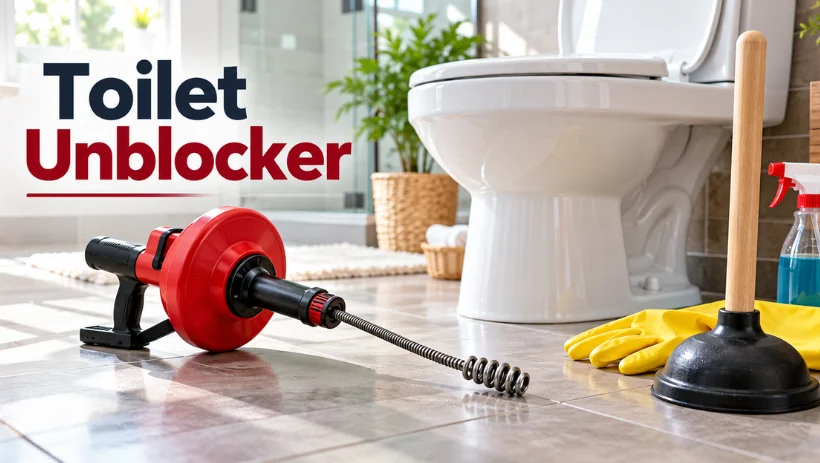
A toilet unblocker should match the blockage, not the loudest claim on a bottle. For most UK homes, a proper toilet plunger is the sensible first choice. A toilet auger is the next step when the obstruction sits deeper. For most UK homes, start with a flange or bell-style toilet plunger that seals around the outlet. Use a toilet auger when the blockage sits deeper or resists repeated plunging.
Choose liquid products only when the label specifically confirms toilet use, and never mix cleaning chemicals.
| Toilet Unblocker | Practical answer |
|---|---|
| Best first tool | Flange or bell-style toilet plunger |
| Best for deeper clogs | Toilet auger or closet auger |
| Liquid products | Use only when the label confirms it’s suitable for toilets. |
| Bowl already full | Stop flushing and reduce the water level first. |
| Several drains affected | Suspect a deeper drain problem and call a professional. |
| Main prevention rule | Flush only pee, poo, and toilet paper. |
Which Toilet Unblocker Should You Choose?
The right choice depends on what the toilet is doing and what probably caused the blockage. A slow drain may involve paper or waste near the trap. A completely static bowl can indicate a firmer obstruction or a deeper problem.
| Option | Best for | Advantages | Drawbacks | Our verdict |
|---|---|---|---|---|
| Flange toilet plunger | Common paper and waste clogs | Cheap, reusable, no chemicals | Needs a good seal and correct technique | Best starting point for most homes |
| Toilet auger | Deeper or stubborn clogs | Reaches beyond the bowl trap | Can scratch porcelain if used badly | Best second step after plunging |
| Toilet-safe liquid | Soft organic build-up | Simple to apply | Slow, product-specific, chemical risks | Use only when the label allows toilet use. |
| Air pressure tool | Some resistant clogs | Delivers stronger pressure | Can be messy or excessive | Better for confident users |
| Plumber or drainage engineer | Recurring or system-wide problems | Diagnoses the real cause | Costs more than DIY tools | Right choice when symptoms extend beyond one toilet |
Our recommendation is simple for ordinary household blockages. Start with a correctly shaped plunger before buying stronger equipment. Move to an auger when two careful plunging attempts make no meaningful difference.
Start by Working Out Where the Blockage Is
Check the toilet before forcing anything into the waste pipe. A slowly falling water level often suggests a partial obstruction. Water that remains high after flushing suggests a more complete blockage. Check nearby fixtures before assuming the problem is inside the toilet.
A slow bath, shower, or sink can point towards shared drainage trouble. Several affected fixtures are a stronger reason to stop DIY work.
A Flange Plunger Is the Best First Tool
A toilet plunger needs to seal around the outlet at the bottom of the bowl. Flange and bell-shaped designs usually seal better than flat sink plungers. The seal lets pressure and suction act directly on the obstruction.
Pros
- Low purchase cost
- Reusable for future blockages
- No chemical exposure
- Effective on many soft clogs
Cons
- Less useful on solid objects
- Requires enough water to cover the cup
- Poor technique can create splashing
A plunger also gives you useful feedback about the blockage. Movement in the water often means the obstruction is shifting. No movement after several careful attempts suggests you need a different method.
How to Use a Toilet Plunger Safely
Before starting, stop flushing if the bowl is already high. Put on rubber gloves and protect the floor with old towels. Remove some water with a container if the bowl is close to overflowing.
- Place the plunger head into the bowl at an angle.
- Fill the cup with water to avoid trapping air.
- Center the flange over the waste outlet and create a firm seal.
- Push down steadily, then pull back without breaking the seal.
- Repeat the motion about ten to fifteen times.
- Pause and check whether the water level starts falling.
- Repeat once if the first attempt produces some movement.
- Test with a cautious flush only after normal drainage returns.
Use controlled force rather than violent plunging. A strong seal matters more than speed or aggressive movement. Clean and disinfect the tool after the blockage has cleared.
Use a Toilet Auger for a Deeper Blockage
A toilet auger uses a flexible cable to reach beyond the pan outlet. It can break up soft material or catch an object near the trap. Toilet-specific models usually include protection around the cable near the porcelain.
Pros
- Reaches blockages beyond the plunger
- Useful for compacted paper and some objects
- Reusable when stored correctly
Cons
- Costs more than a basic plunger
- Needs careful handling
- Can mark the bowl if the metal cable scrapes porcelain
Feed the cable slowly until you meet resistance. Rotate the handle while applying gentle forward pressure. Withdraw the cable carefully if you feel it catch an object.
Be Careful With Liquid and Chemical Products
Not every drain cleaner belongs in a toilet. Some retailers specifically advise using only products labelled for toilet use. Standard sink formulas may have different instructions, ingredients, and safety requirements. Never mix different cleaning chemicals in the bowl. Bleach can react dangerously with some acids and other cleaning products.
Follow the label exactly, including instructions for protective equipment and ventilation. Bathroom cupboards often contain several cleaners beside plumbing products. Readvanta’s under-sink storage guide explains safer organization around pipes and household products. Keep strong cleaners away from children, pets, food, and unrelated chemicals.
Can Hot Water and Washing-Up Liquid Help?
Hot, not boiling, water can help soften some paper-based blockages. Washing-up liquid can lubricate soft material in the trap. Neither method can remove a solid object lodged inside the waste path. Avoid boiling water because sudden heat can damage some toilet components. Leave enough space in the bowl before adding more liquid. Stop if the water level rises towards the rim.
When to Stop DIY Unblocking
Some symptoms point to more than a simple blockage inside the pan. Recurring clogs can indicate a restricted pipe or drainage problem. Multiple slow fixtures can also suggest trouble farther along the system.
Call a plumber or drainage professional when you notice any of these signs.
- Wastewater returning through another fixture
- Several drains becoming slow at the same time
- A toilet that repeatedly blocks after clearing
- Sewage smells or visible sewage outside
- A suspected solid object that an auger cannot retrieve
- No improvement after careful plunging and augering
Professional help can prevent repeated attempts from pushing a problem farther down the pipe. A drainage engineer can inspect the system when the cause is not obvious. That matters more than buying another bottle or applying greater force.
Prevent the Next Toilet Blockage
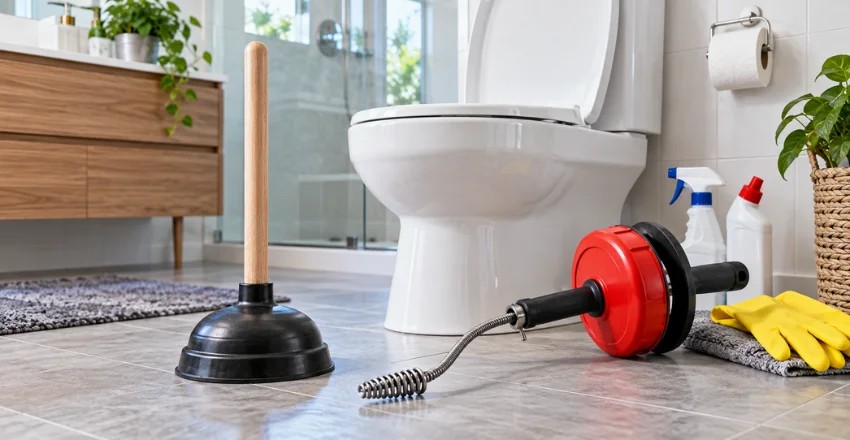
The simplest prevention rule is to flush only human waste and toilet paper. Wet wipes, sanitary products, cotton items, and similar materials belong in the bin. For this reason, UK water guidance still promotes the “three Ps” message.
Use less toilet paper per flush when large amounts cause repeated problems. Keep small objects away from open toilet bowls in family bathrooms. A lidded bathroom bin makes correct disposal easier for wipes and hygiene products.
Good bathroom storage also keeps tools ready without blocking access to plumbing. Readvanta’s under-sink storage coverage can help you organise cleaning supplies around pipework. Clear access helps when you need to reach an isolation valve quickly.
If you are improving the room after fixing plumbing problems, small details can make maintenance easier. Readvanta’s radiator pipe covers guide explains neat ways to finish exposed pipework. Its bathroom wallpaper guide also covers moisture-resistant choices for cloakrooms and bathrooms.
A Simple Buying Checklist
Don’t choose an unblocking product just because the packaging promises strength. Match the tool to the blockage and your confidence level. A useful household kit can stay simple and inexpensive.
Before buying, check the following points.
- The plunger is designed for toilets rather than flat sink outlets
- An auger has a protective sleeve near the porcelain
- Replacement parts are available for reusable tools
- Liquid products specifically state toilet suitability
- Chemical labels give clear safety and disposal instructions
- Storage keeps contaminated tools separate from everyday bathroom items
For most households, a plunger and toilet auger cover the widest range of manageable clogs. Liquid products are optional, not essential. Repeated problems deserve diagnosis, not a growing collection of stronger products.
Final Recommendation
Start with a flange toilet plunger because it suits the most common household blockage. Keep a toilet auger available for clogs that sit farther into the trap. Reserve liquids for products that explicitly state they are suitable for toilets.
Stop escalating when the symptoms involve more than one fixture. That pattern can indicate a wider drainage problem rather than a local clog. The right response then is diagnosis, not greater pressure or stronger chemicals.
Frequently Asked Questions
What is the best tool for a blocked toilet?
A flange or bell-style plunger is the best first tool for most ordinary clogs. It creates pressure without introducing chemicals into the bowl. Use an auger when careful plunging doesn’t move the obstruction.
Can I use a toilet unblocker liquid in every toilet?
No liquid product is suitable for every toilet. Check the label for toilet use, pipe compatibility, and safety instructions. Avoid using products intended only for sinks, showers, or other drains.
What should I do if the toilet bowl is nearly overflowing?
Do not flush the toilet again when the water is already high. If needed, stop the water supply and protect the floor. Remove enough water to work safely before trying a plunger.
Why does my toilet keep blocking?
Repeated blockages can come from unsuitable flushed items or a persistent restriction. A deeper drain issue may also cause the same problem. Seek professional assessment when the toilet blocks again soon after clearing.
When should I call a plumber for a blocked toilet?
Call for help when several fixtures are affected or sewage appears elsewhere. You should also stop when careful DIY methods repeatedly fail. A professional can diagnose deeper drainage faults instead of treating only the symptom.